Cursive font prompts for every joined hand: school cursive, Spencerian and copperplate, thick retro script, cute notebook cursive, coquette and the fast signature. These are prompts, not font files or copy-and-paste text: type your word, copy, and paste into ChatGPT or Gemini, or generate it right away on FontVibe.
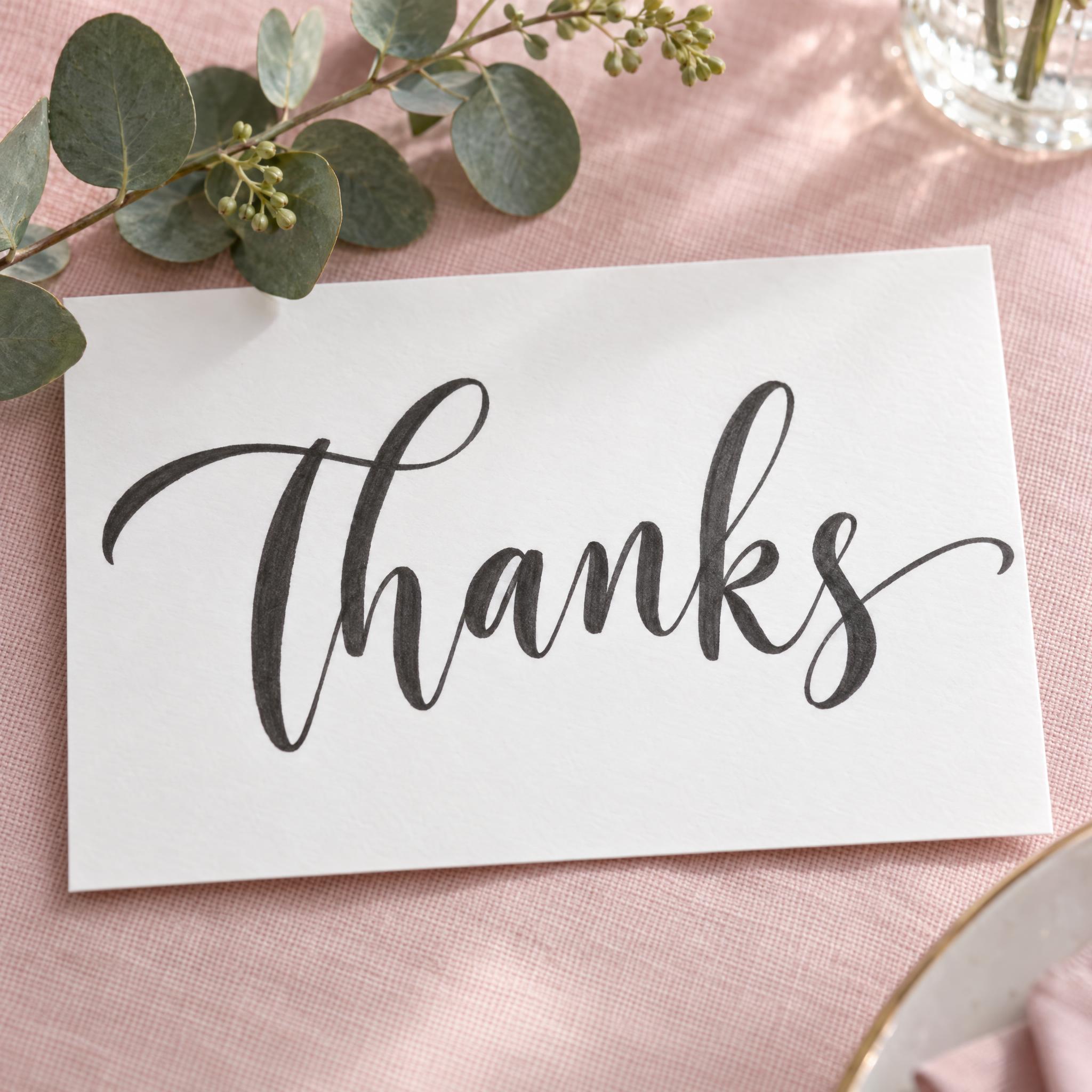
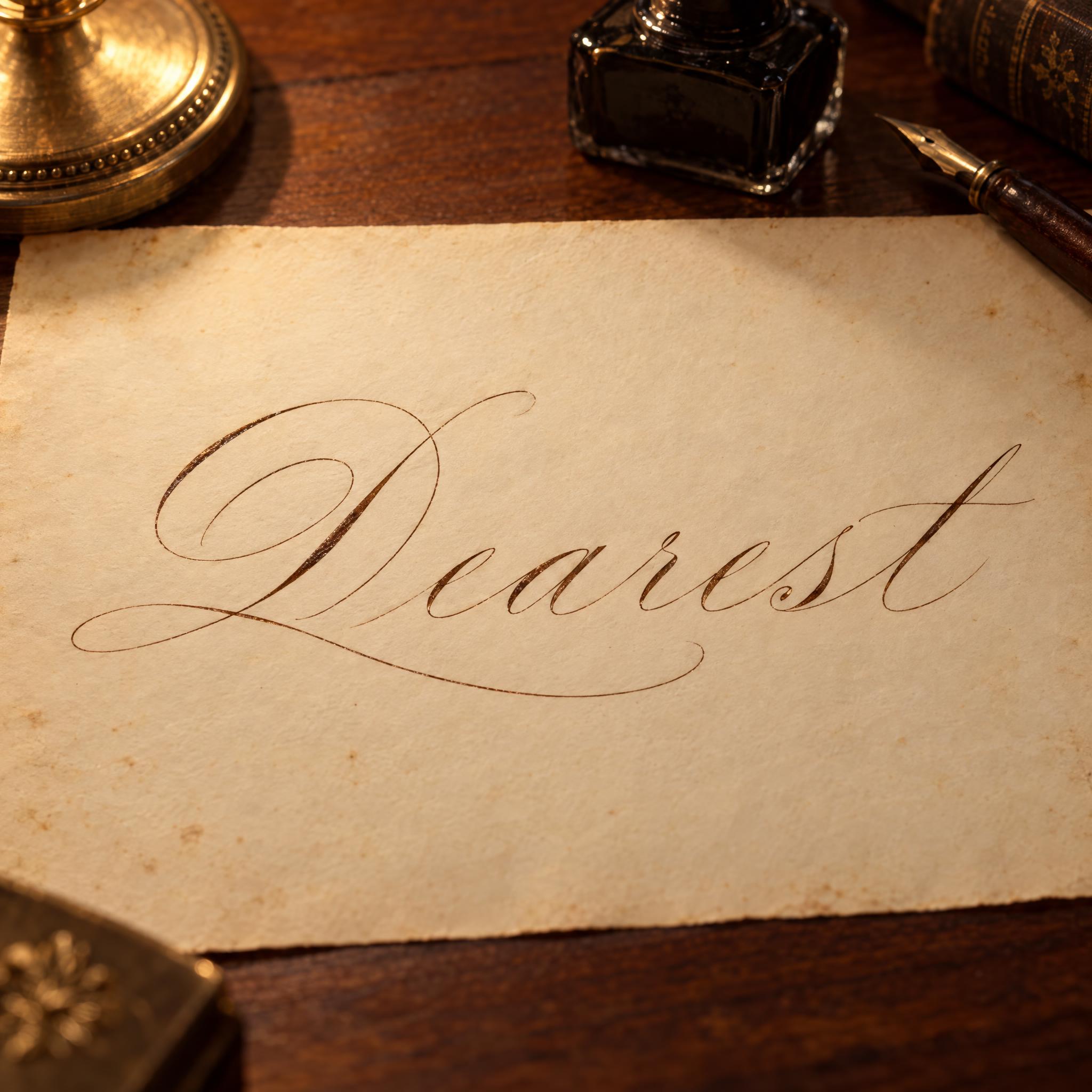
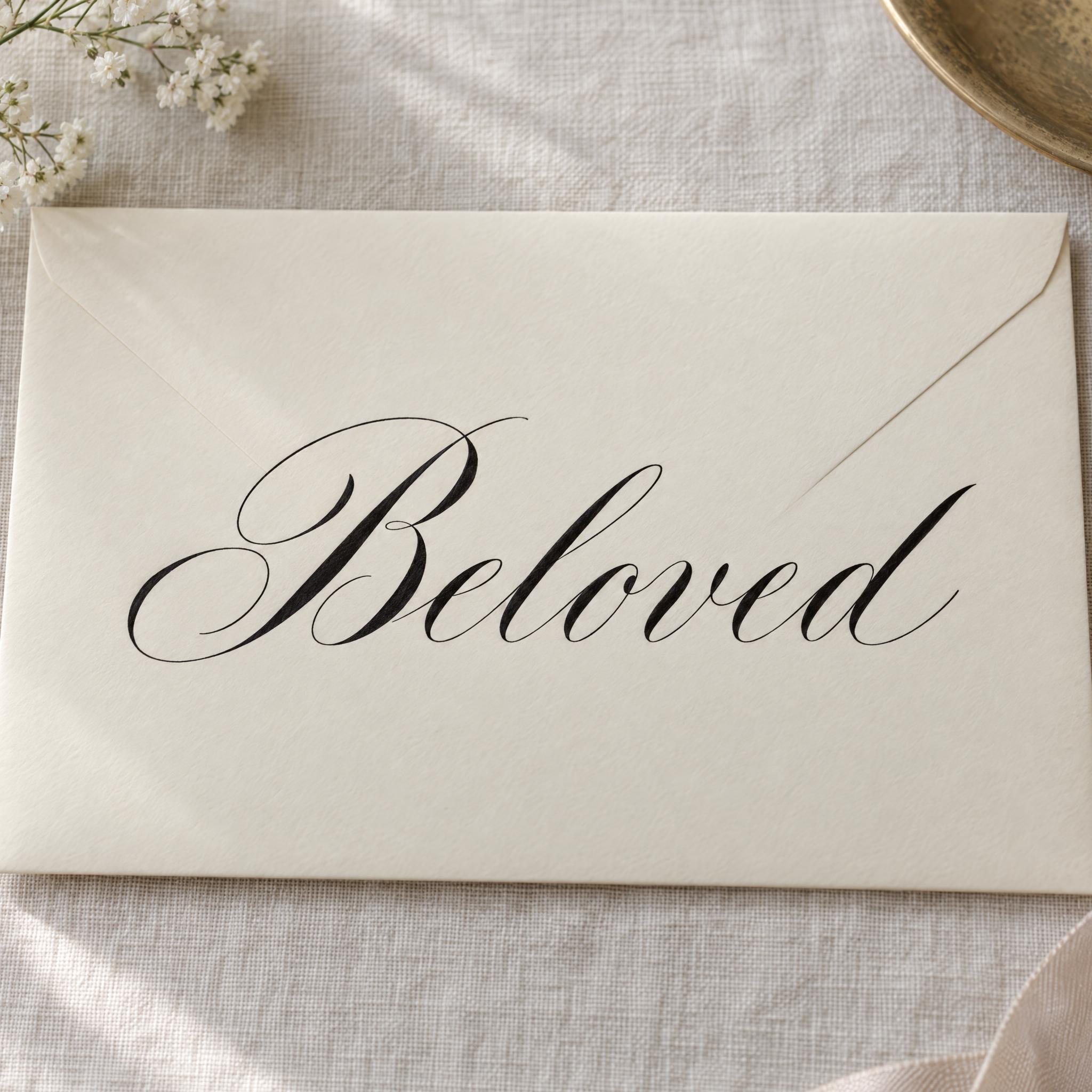
Type your word, copy the full prompt and paste it into ChatGPT, Gemini or any image model.
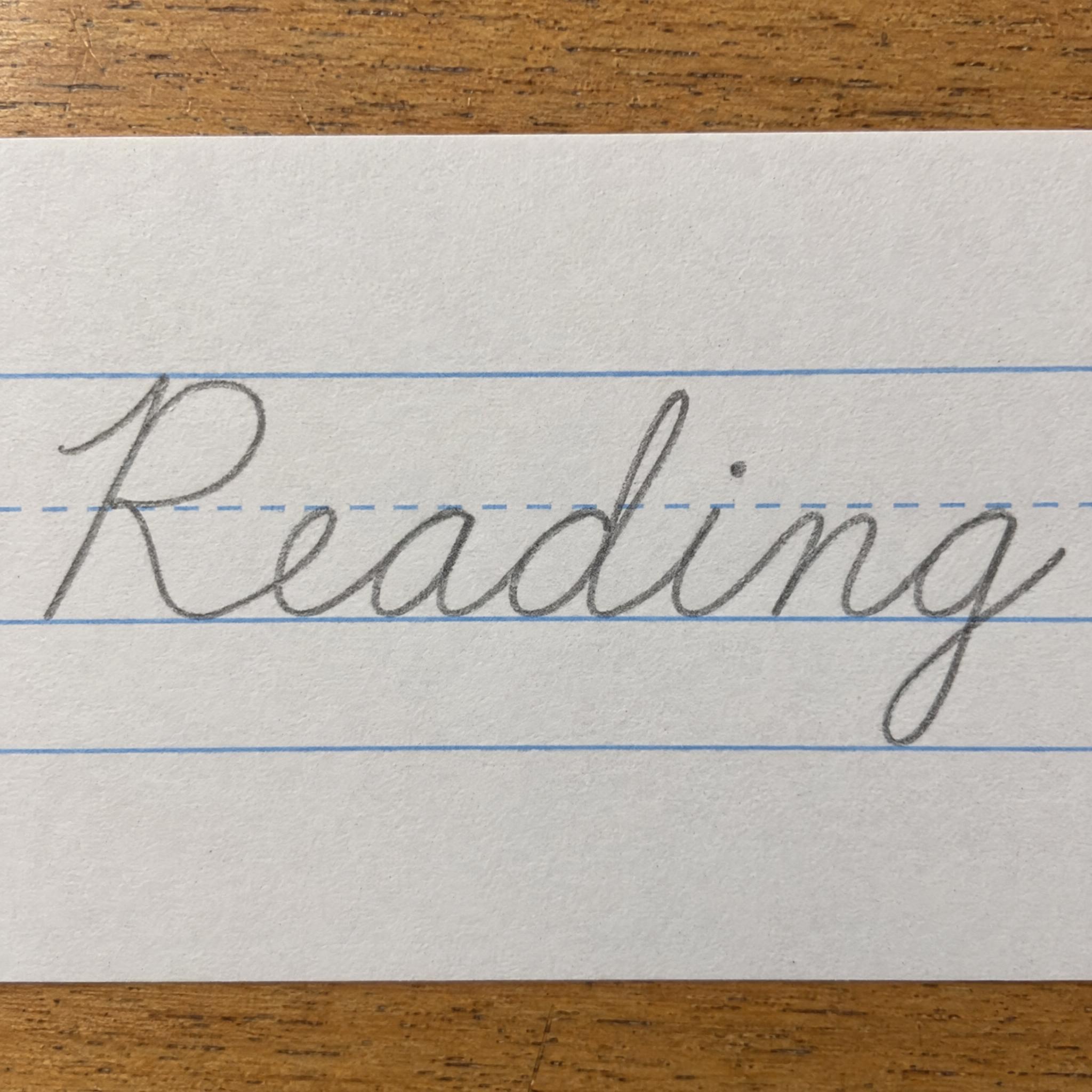
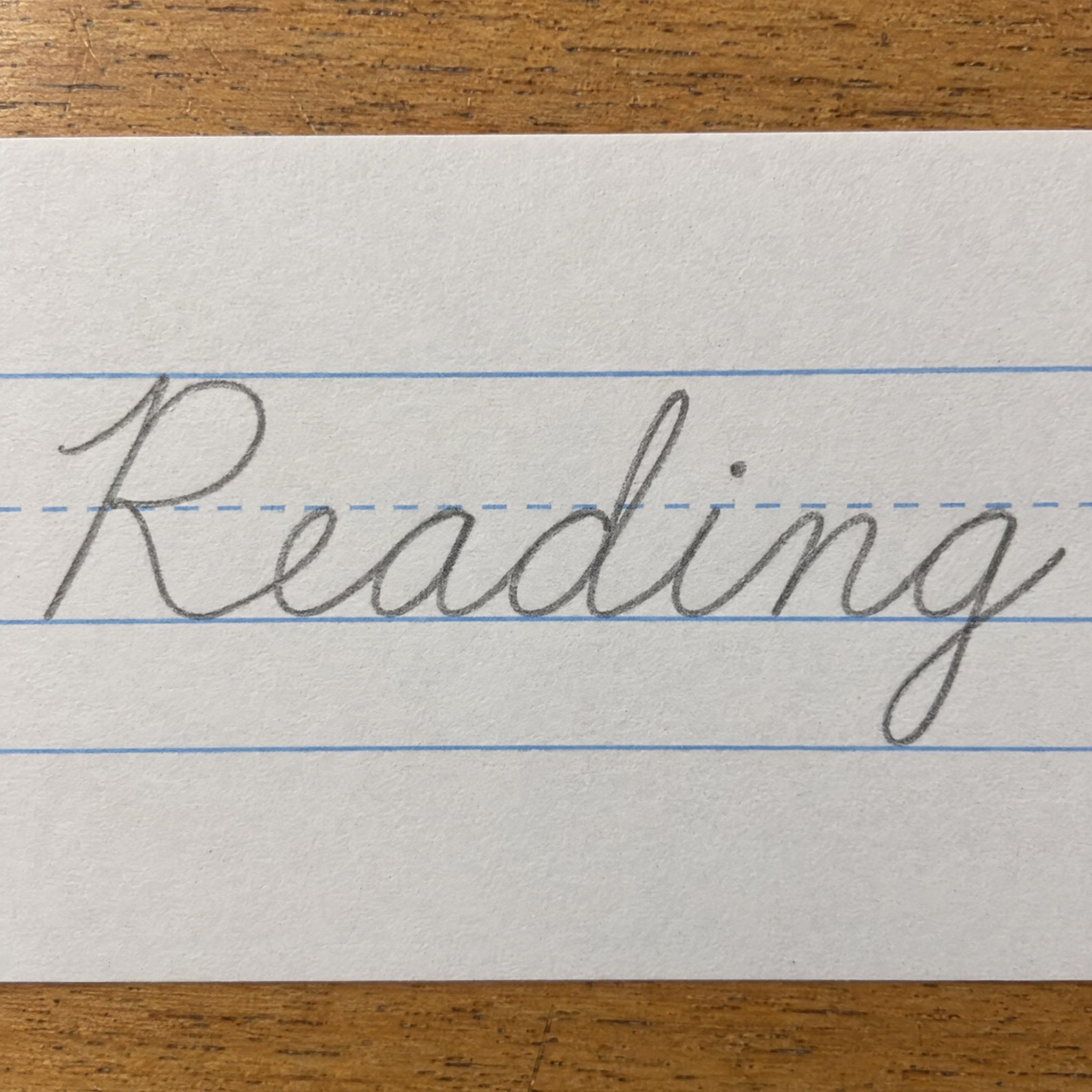
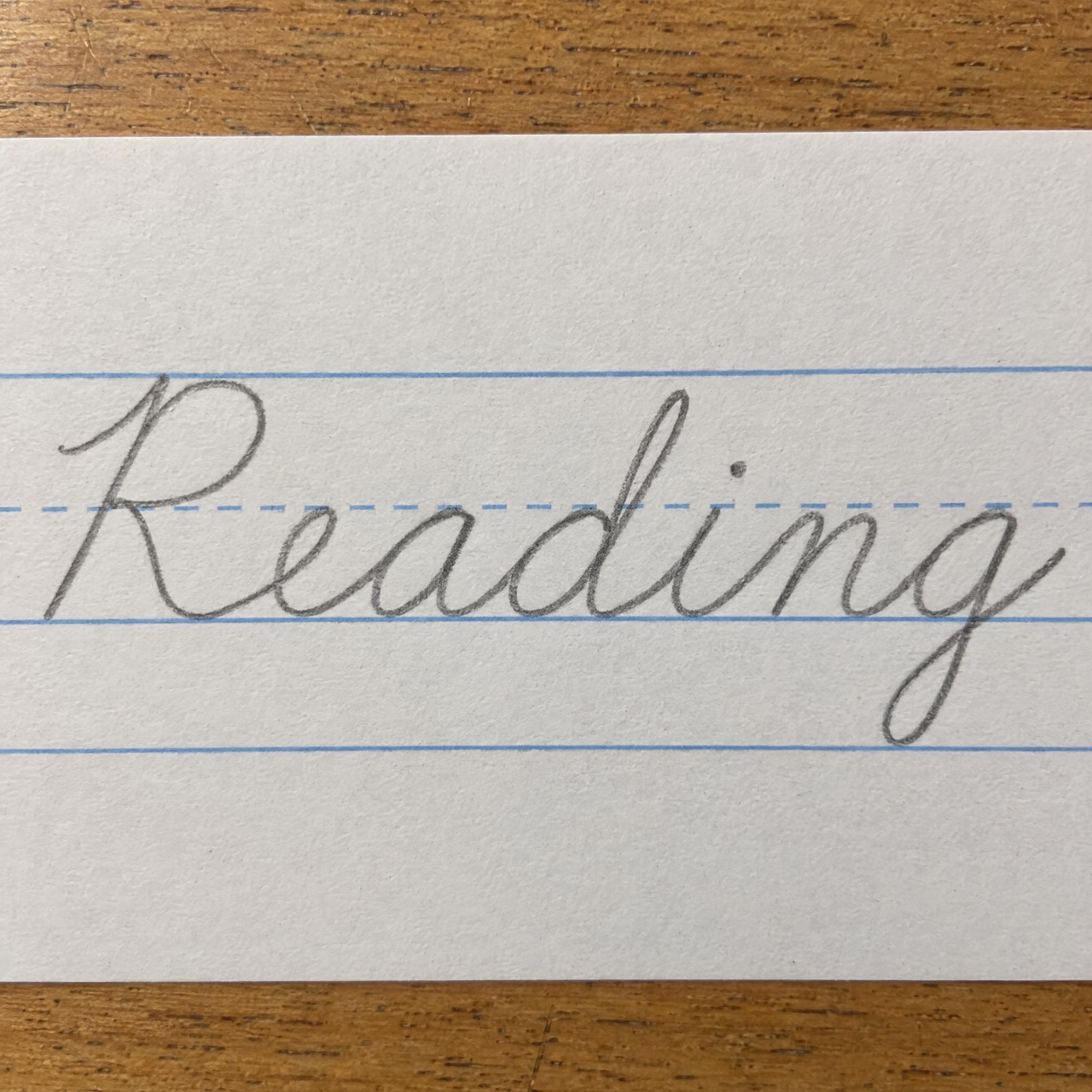
TextWrite the word "Reading". Spell it exactly as written, without adding or changing any letter.
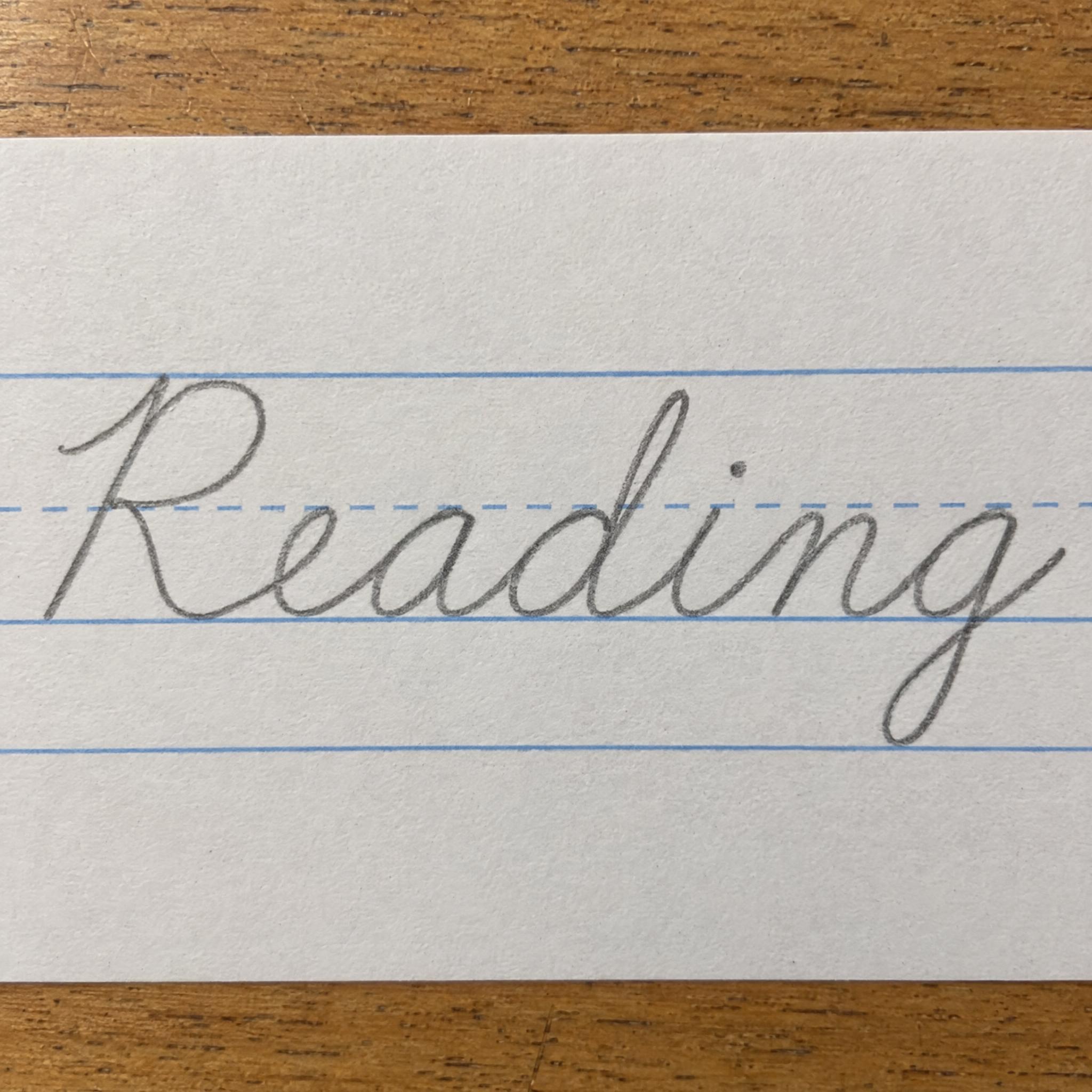
Font designSchool cursive handwriting: the joined cursive taught in elementary school, written neatly with a sharp pencil, every letter connected to the next by a smooth entry and exit stroke, one even forward slant, loops of the same size on every tall letter and a simple looped capital; every letter reads at a glance. The line is an even, thin graphite grey. The stroke is smooth with a soft pencil sheen. Never a decorative calligraphy script with thick and thin strokes. Like the model alphabet on a classroom cursive chart.
SceneThe word is written on lined practice paper with a dashed midline, on a school desk. The word is centered, spans most of the width and reads clearly.
Open one for the prompt and real results on each image model.
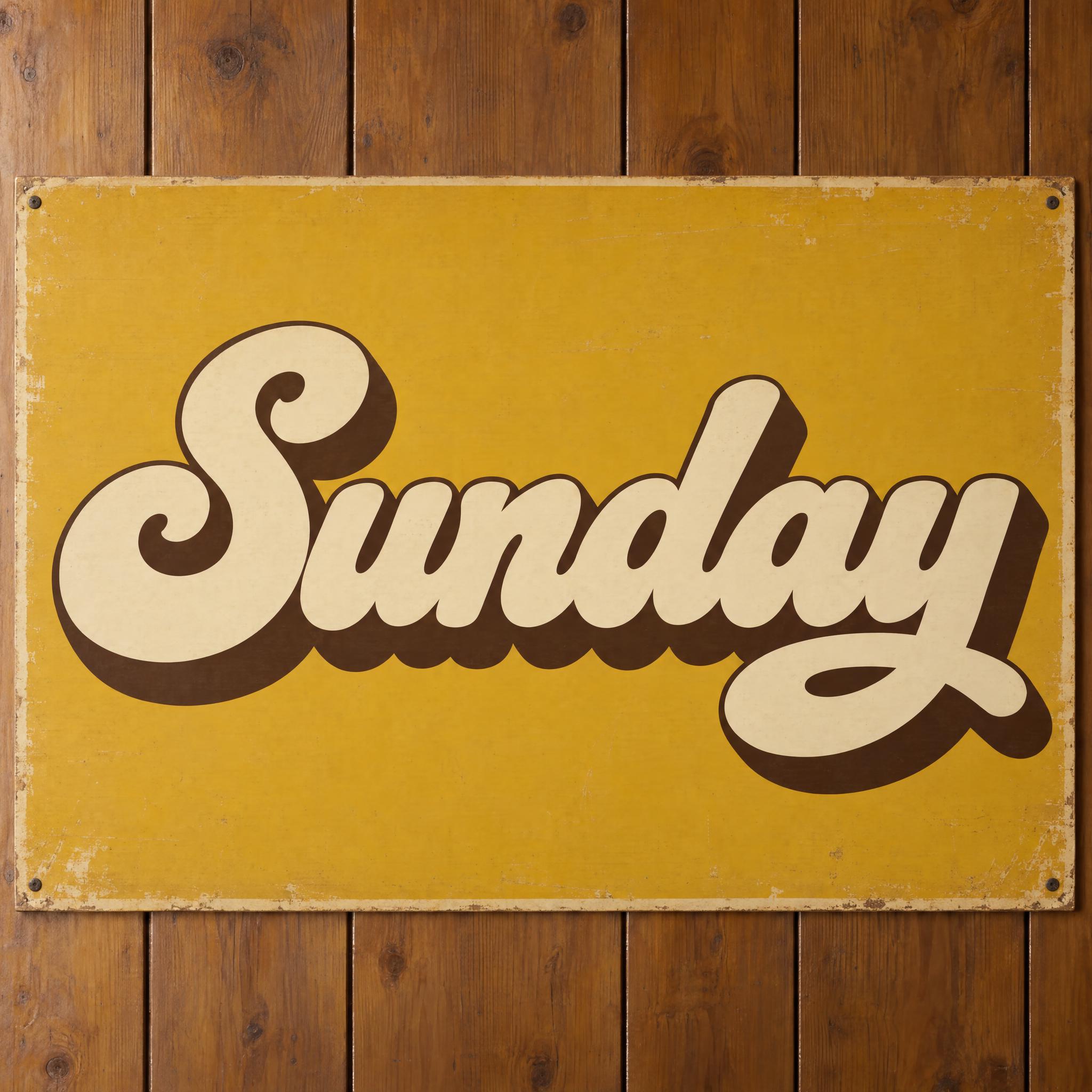
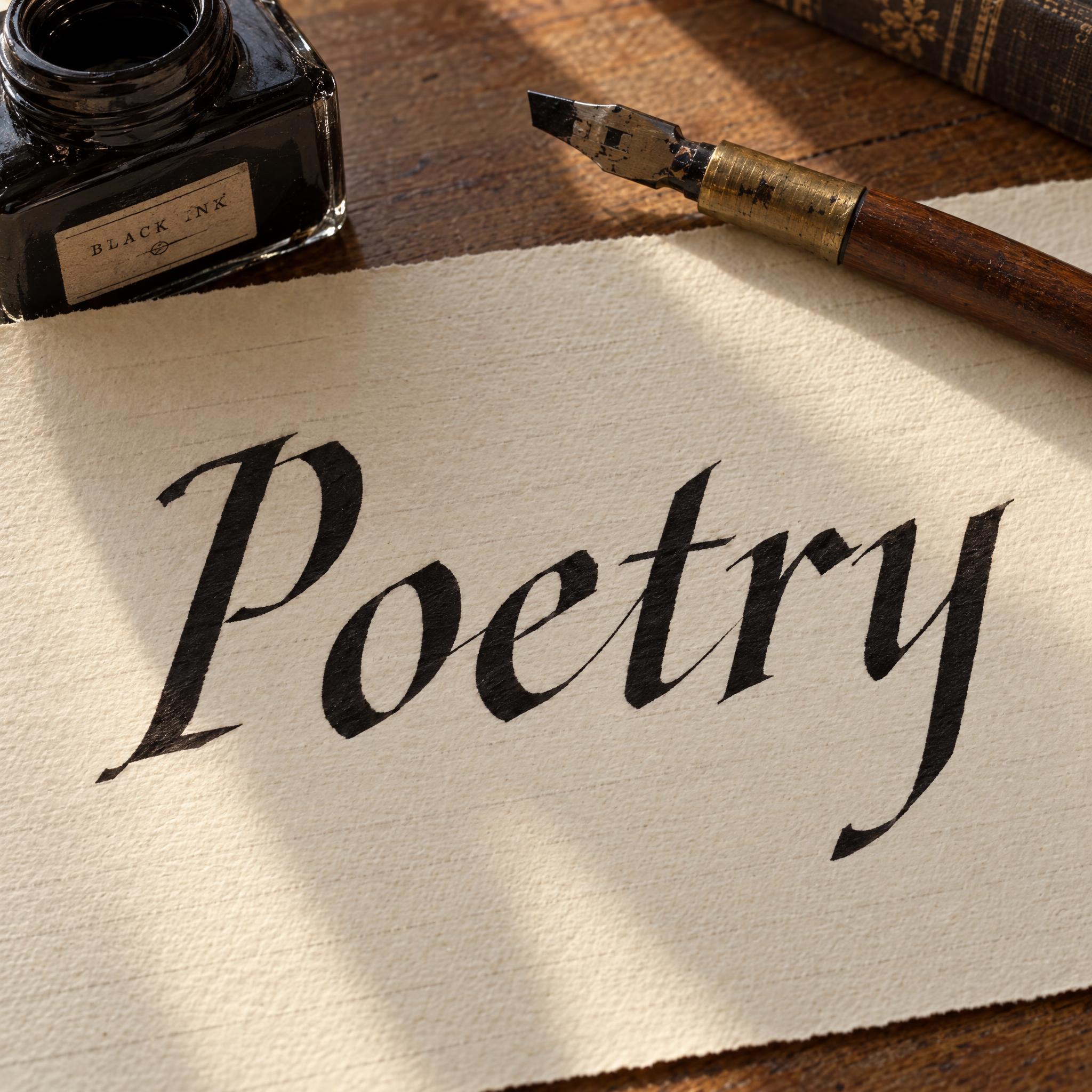
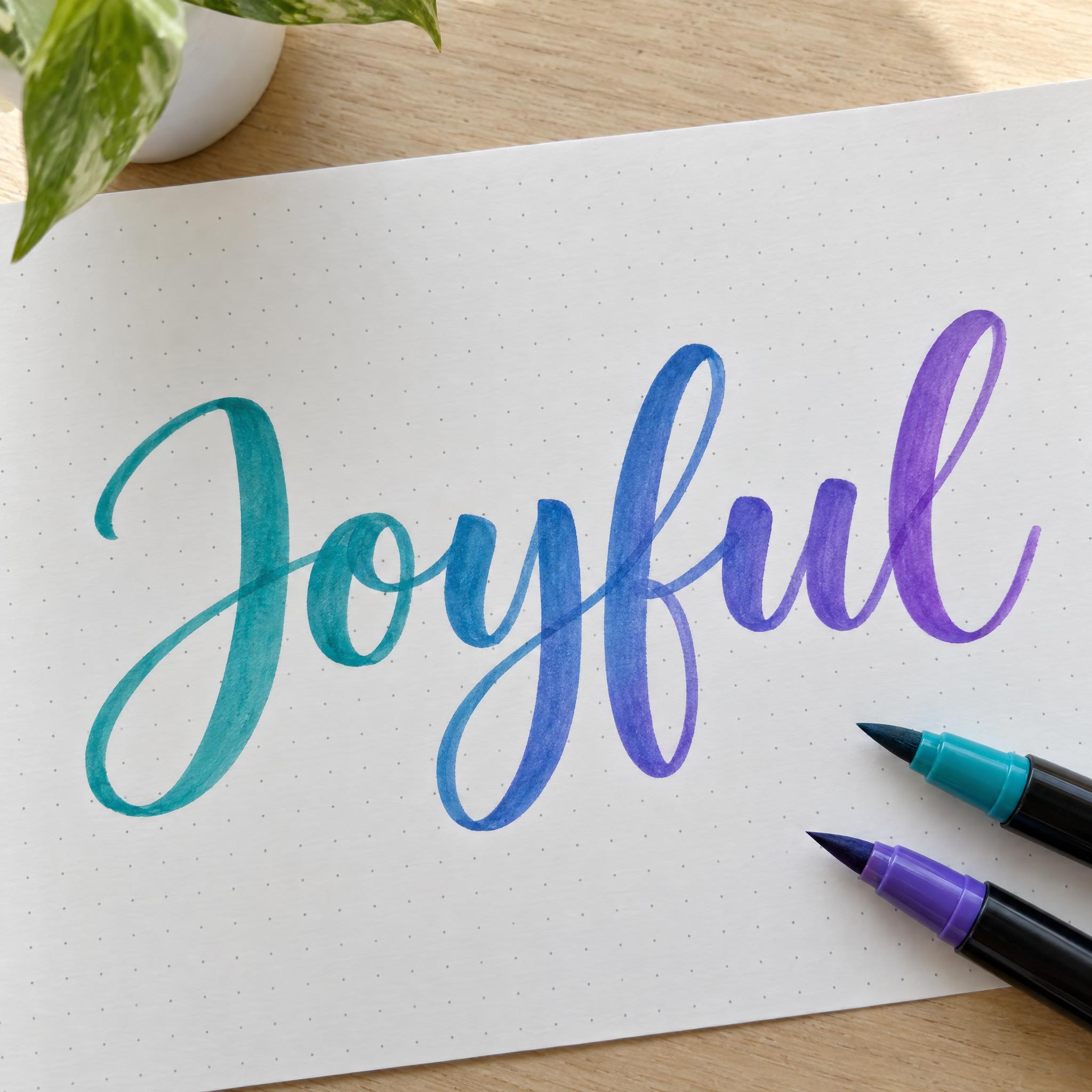
Tested October 2026. First attempts from our test ledger: 401 images, 11 fonts, 7 languages, each one checked by eye.
How to read it: 76 / 82 means 82 images tested and 76 spelled the word right on the first try; the percentage is that share. The Latin, Chinese / Japanese and Arabic columns split the same count by the script of the word.
| Model | Right first time | Latin | Chinese / Japanese | Arabic | Most common issue |
|---|---|---|---|---|---|
| GPT Imagegpt-image-2.5-sunburst · xhigh | 93% 76 / 82 | 100% 46 / 46 | 95% 21 / 22 | 64% 9 / 14 | Unreadable letters |
| Nano Bananagemini-nano-banana-2.1 | 100% 79 / 79 | 100% 44 / 44 | 100% 22 / 22 | 100% 13 / 13 | Small style drift |
| Seedreamdola-seedream-5-0-pro-260628 | 88% 70 / 80 | 95% 42 / 44 | 95% 21 / 22 | 50% 7 / 14 | Extra letter |
| Grok Imaginegrok-imagine-image-2.0 · medium | 94% 75 / 80 | 95% 42 / 44 | 95% 21 / 22 | 86% 12 / 14 | Style drifted |
| Qwen-Imageqwen-image-3.0-pro | 65% 52 / 80 | 77% 34 / 44 | 77% 17 / 22 | 7% 1 / 14 | Extra words added |
How we test: images are made through FontVibe with each model’s API, sending the prompt as is; we count only each model’s first image for every font and language and check the spelling by eye. Apps such as ChatGPT may rewrite prompts, so results there can differ. For the full data, email [email protected].
Every cursive prompt on this page is built from the same layers, one sentence or clause each. The examples are quoted word for word from the prompts of the fonts on this page.
Cursive is decided by what wrote it: a sharp pencil, a fine pen, a flexible nib or a brush. The first sentence names the kind of cursive and the tool together, so the model knows which branch of the family to draw.
“School cursive handwriting: the joined cursive taught in elementary school, written neatly with a sharp pencil” — School Cursive
Joined letters are what make a hand cursive, and the joins are where models drop or add letters. Spell out the connecting stroke, the slant and the loops in plain words.
“every letter connected to the next by a smooth entry and exit stroke, one even forward slant, loops of the same size on every tall letter and a simple looped capital” — School Cursive
Weight splits the family in two. A heavy retro script needs one more instruction: the insides of the letters stay open. Without it, a bold word fills in and stops reading.
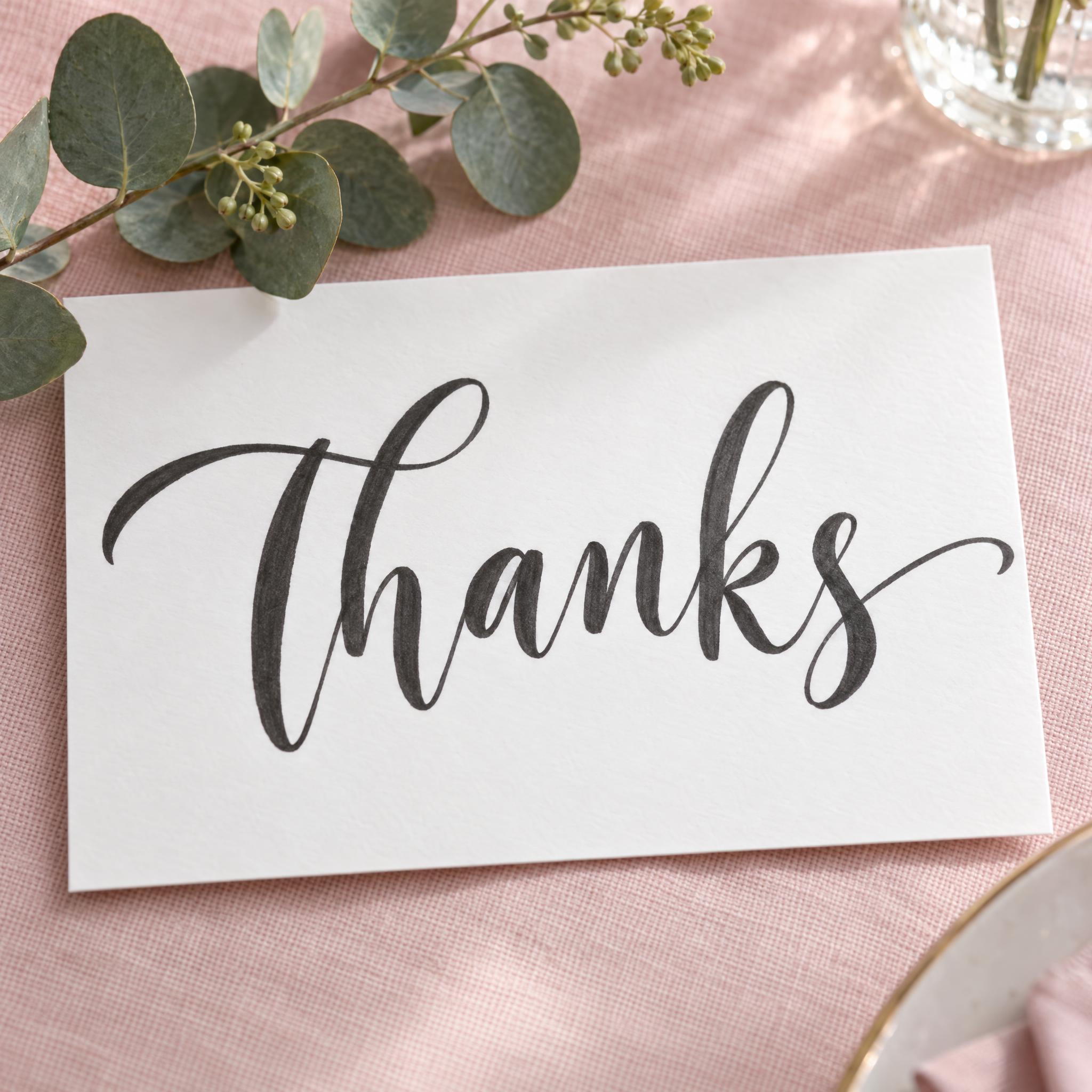
“the strokes are so heavy that the counters are small but stay open” — Thick Cursive Font
A pointed nib or a brush swells on the downstroke; a ballpoint, gel pen or pencil keeps one width. Say which one you want, because a model asked for a script tends to add calligraphic contrast on its own.
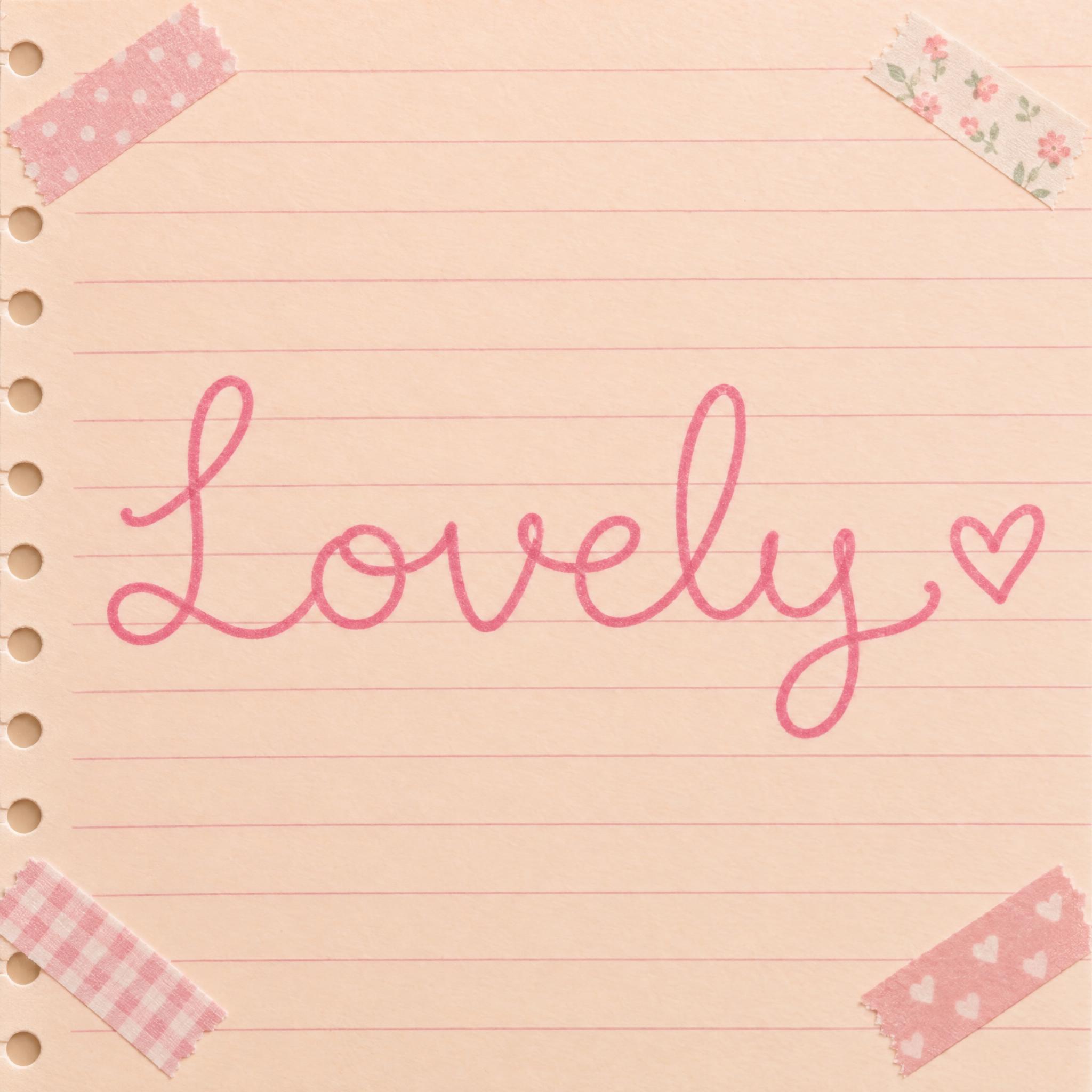
“a playful script written with a fine round-tip pen in one even line of the same thin width everywhere” — Cute Cursive Font
A taught hand sits on the line; a casual hand bounces off it. One clause decides whether the word looks like a classroom chart or a doodle in a notebook.
“the letters joined and bouncing a little above and below the baseline, small round loops” — Cute Cursive Font
Hearts, bows and stars get a sentence of their own, with a number and a place. A decoration without a place can end up on every letter.
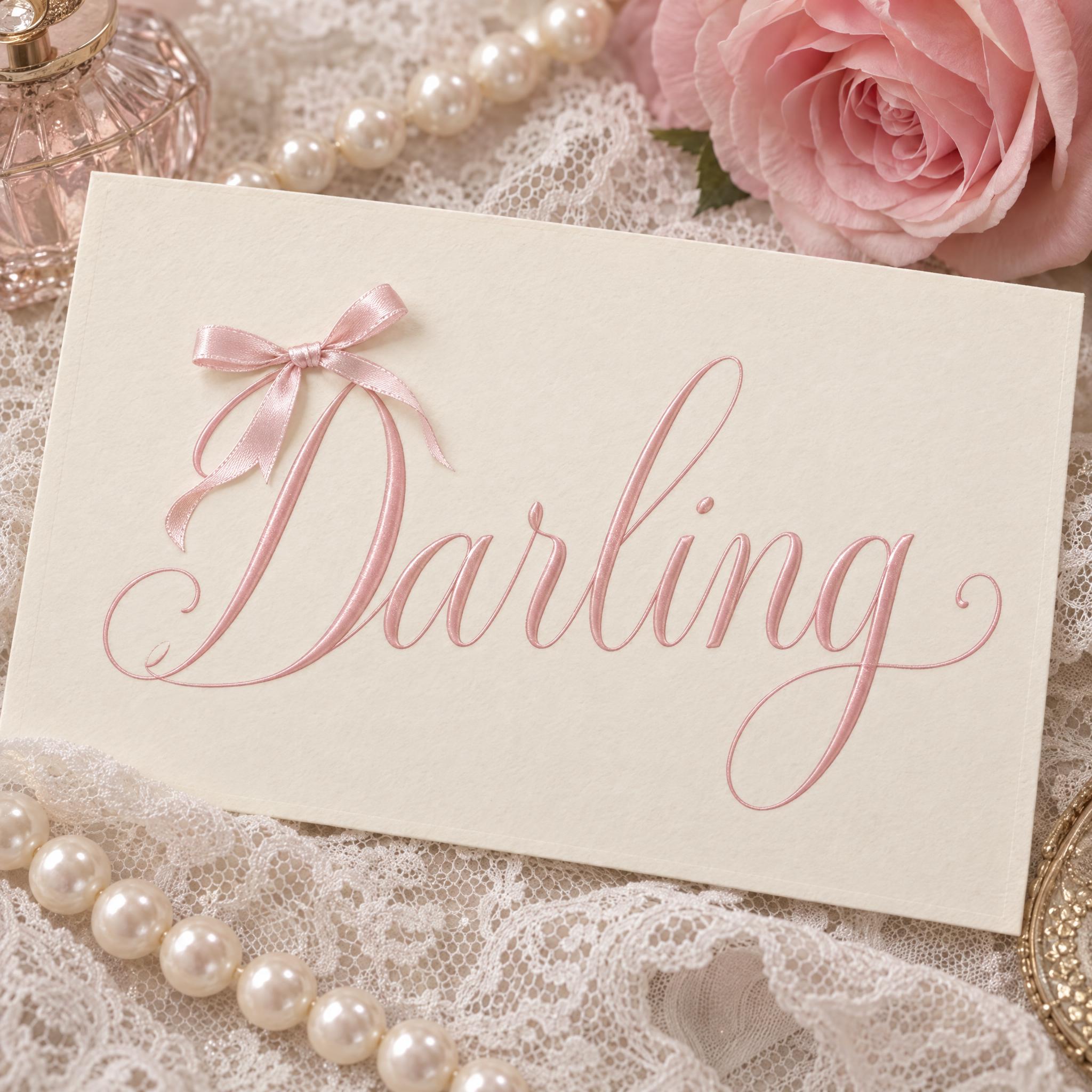
“A small satin ribbon bow is tied onto the top of the capital letter.” — Coquette Font
Rule out the cursive the model would draw instead. For a school hand that is formal calligraphy; for a thick retro script it is a thin, delicate one.
“Never a decorative calligraphy script with thick and thin strokes.” — School Cursive
The surface tells the story: practice paper says classroom, a notebook page says journal, a poster says shop sign. Change this sentence freely; the letters stay the same.
“The word is written on lined practice paper with a dashed midline, on a school desk.” — School Cursive
People search for cursive for different reasons: to learn it, to paste it, or to put a word on something. Here is what each of them needs.
This page makes pictures of a word, not handwriting worksheets. For practice, School Cursive draws a word the way a classroom chart shows it: every letter joined, one slant, loops of one size. Make your practice word large, print it, trace it on lined paper with a dashed midline, then write it freehand next to the copy. Practise the lowercase joins before the capitals.
The cursive letters people paste into a bio are not a font. They are characters from Unicode's Mathematical Alphanumeric Symbols block, completed in version 3.1 in 2001 for mathematical notation, and Unicode recommends that they not be used in general text as a substitute for styling. The prompts here give you a picture instead: joined handwriting drawn for your exact word, for a post, a print, a sticker or a logo, though not for a text field.
The two words are often used for each other, but they come from different places. Cursive is handwriting with the letters joined to write faster. Script is the type designer's word for typefaces based on the strokes of handwriting, made for display rather than long text, from formal pen scripts like Copperplate Script to loose brush scripts. This page is about the cursive side: joined hands, from the classroom to the signature. Handwriting that is not joined is on handwriting fonts; a name written as a real signature is on signature fonts.
Sources: Wikipedia — Script typeface
Digits work too. Type a year, a date or a house number into the box instead of a word, and the prompt draws them in the same pen, colour and slant. Check each digit as carefully as the letters.
Type your word in the box next to the prompt at the top, copy it and paste it into any image app, or press Generate on FontVibe to try five models in one place. Every style below works the same way from its own page.
| You want | Try | Why |
|---|---|---|
| Classroom charts and handouts | School Cursive | Neat pencil, every letter joined |
| A retro shop sign or T-shirt | Thick Cursive Font | Heavy strokes, solid shadow |
| Notebook headers and captions | Cute Cursive Font | Fine even line, a small heart |
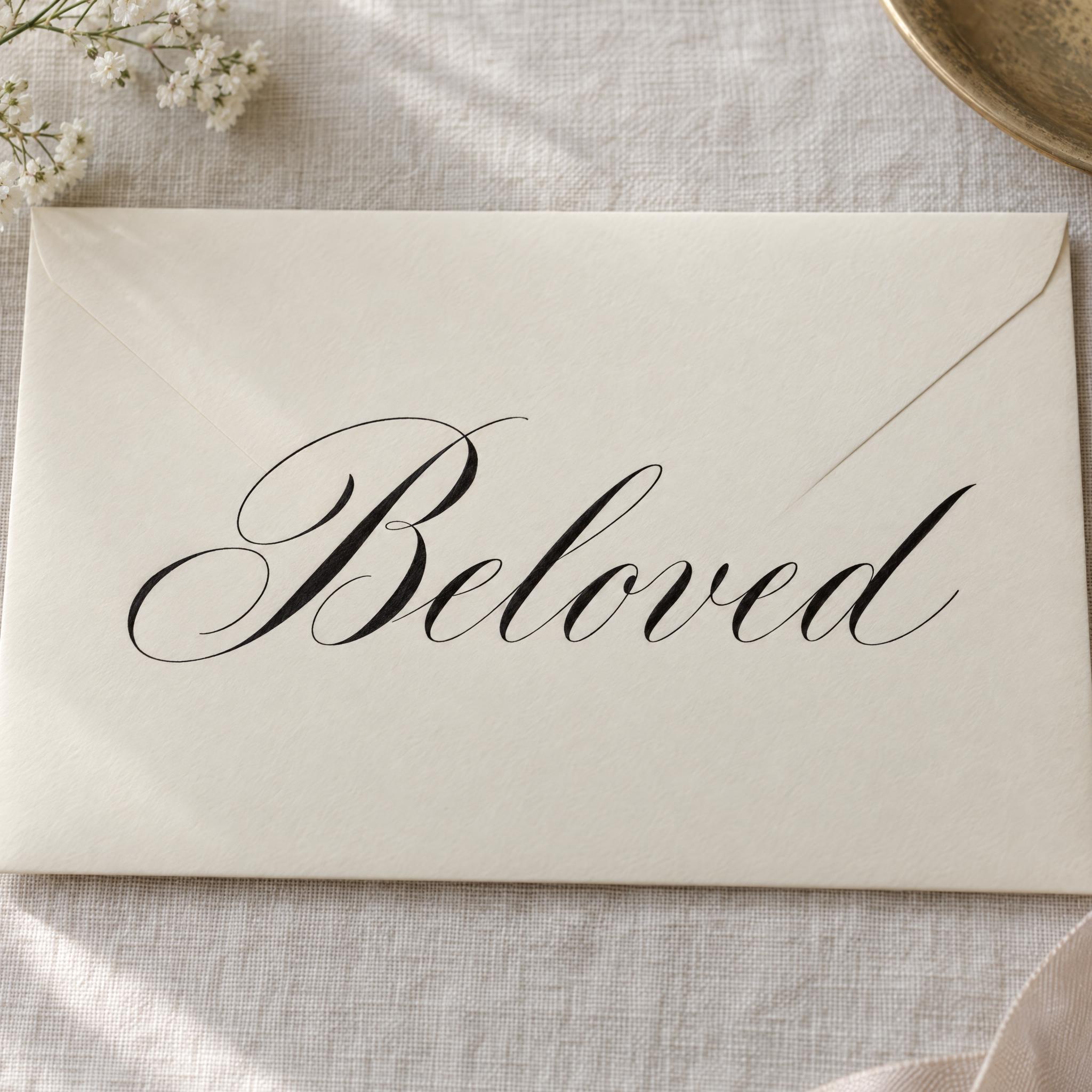
| Pink, bows and lace | Coquette Font | Hairline script with a satin bow |
| Formal invitations | Copperplate Script | Pressure shades, steady slant |
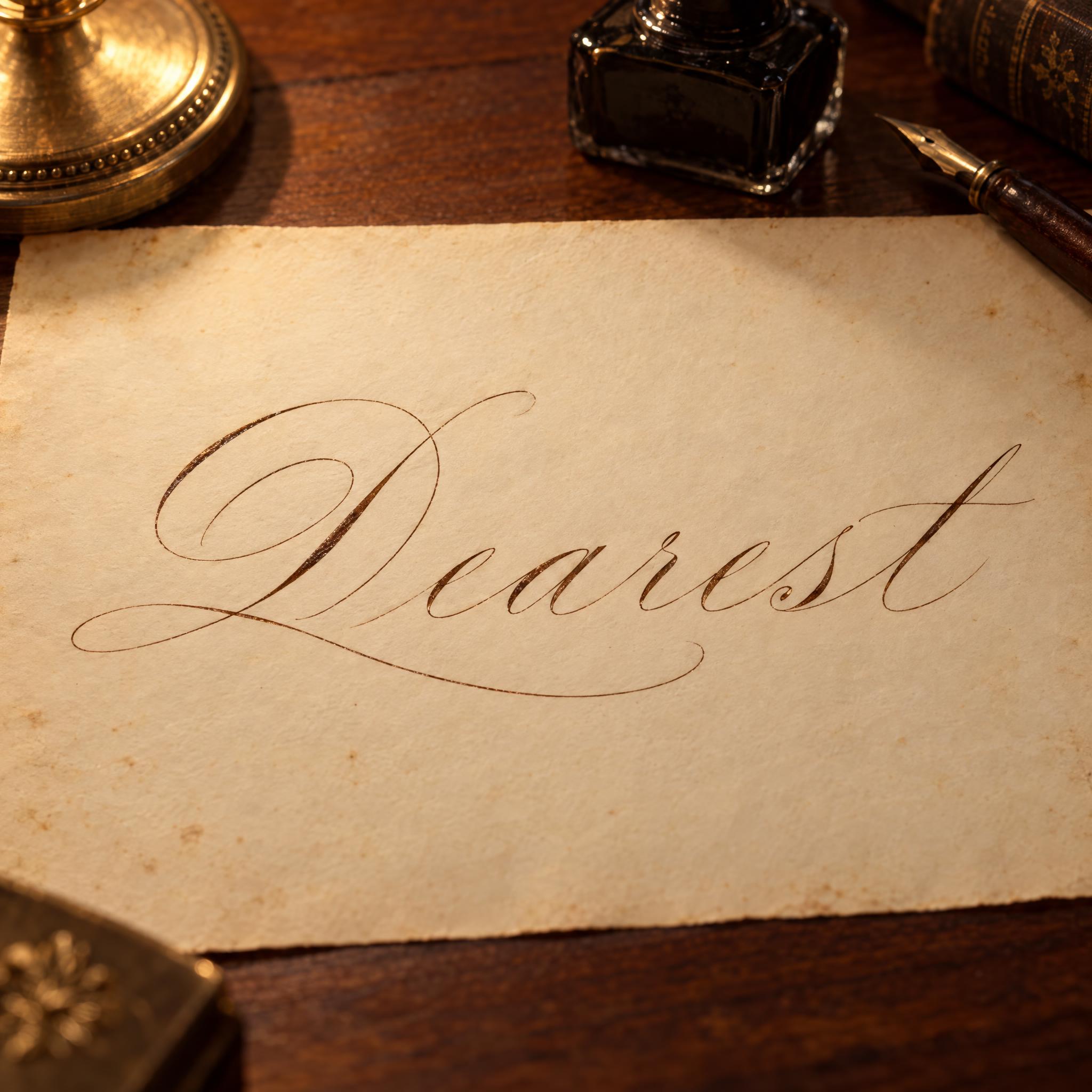
| An old-fashioned letter | Spencerian Script | Light hairlines, oval capitals |
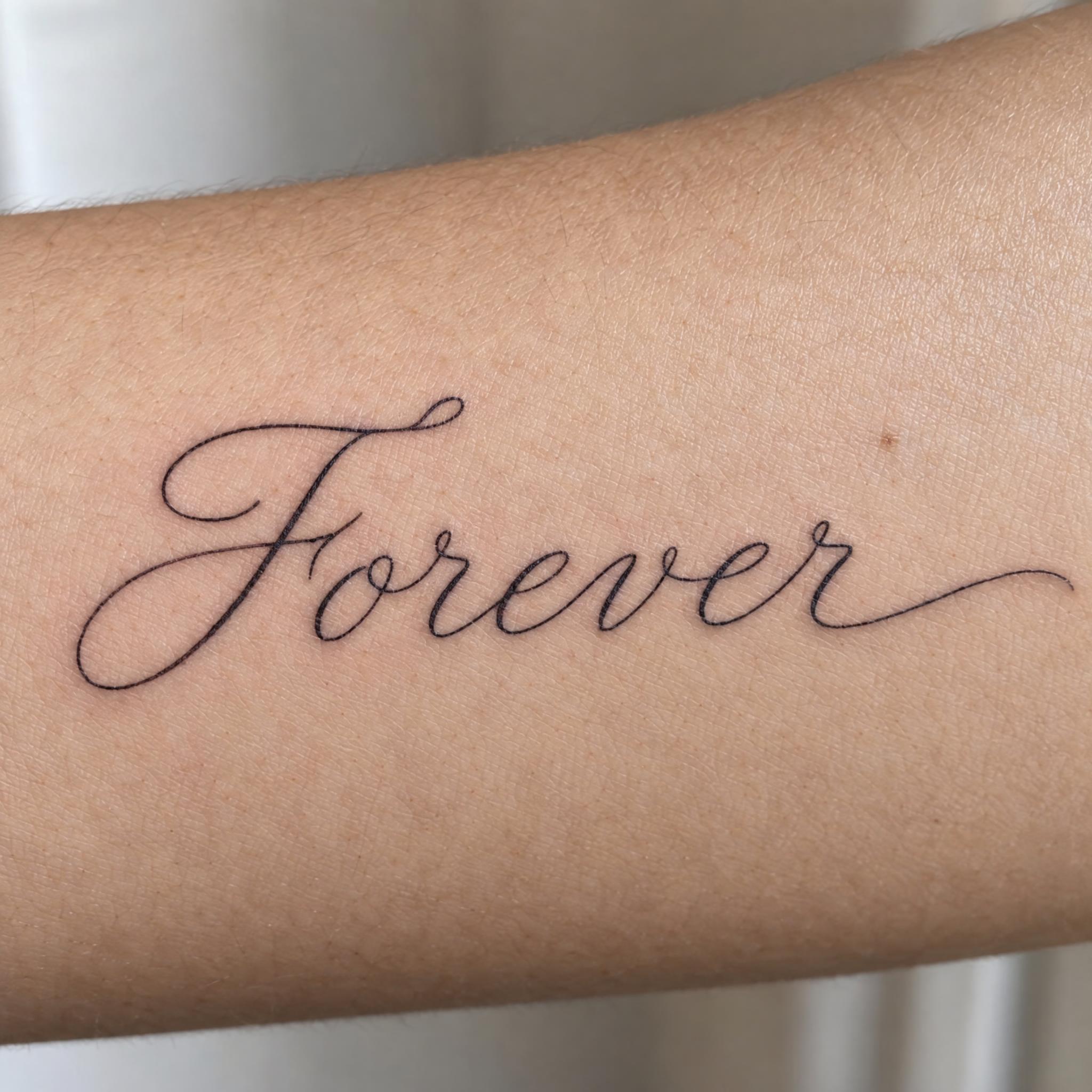
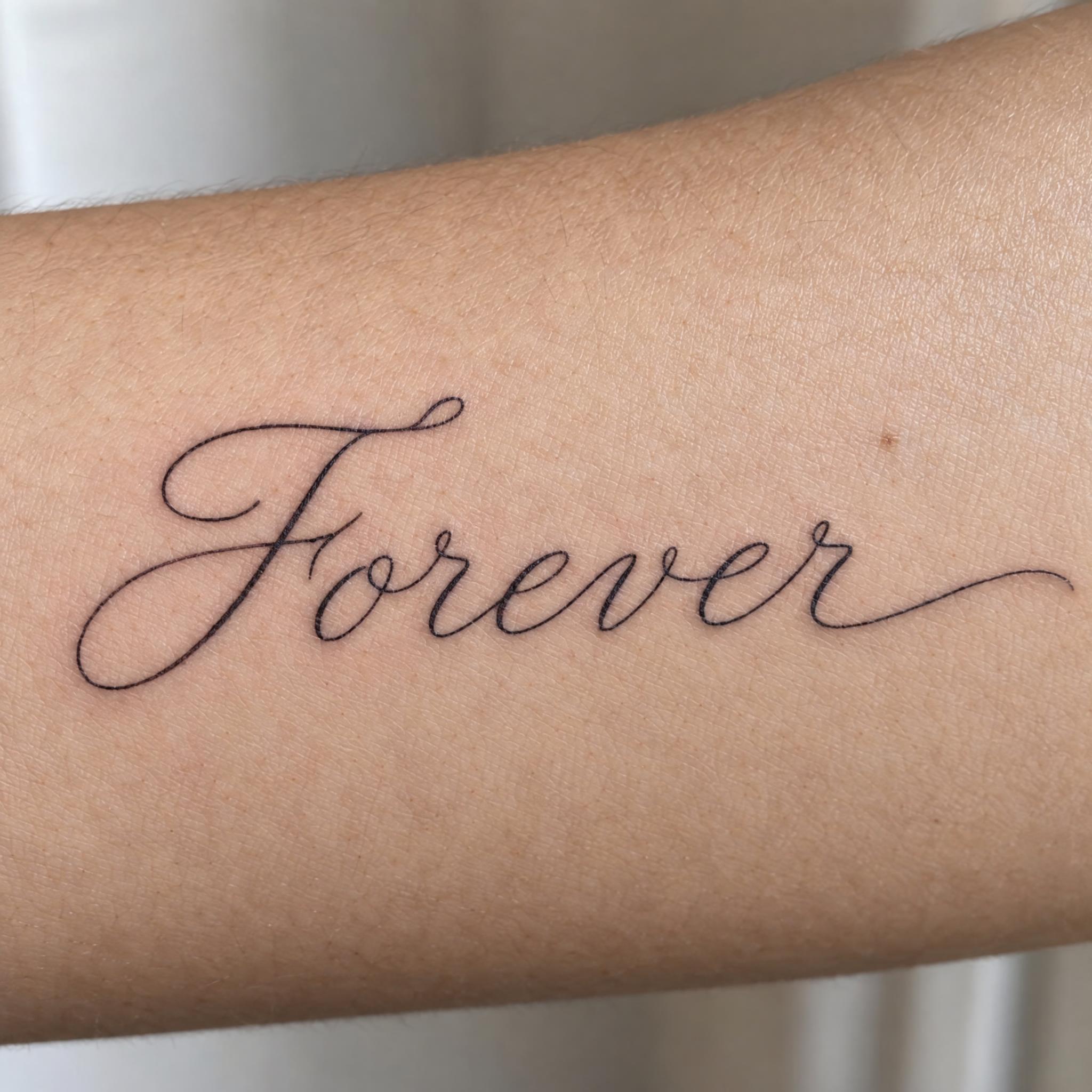
| A wrist or collarbone tattoo | Cursive Tattoo Font | One needle-thin line |
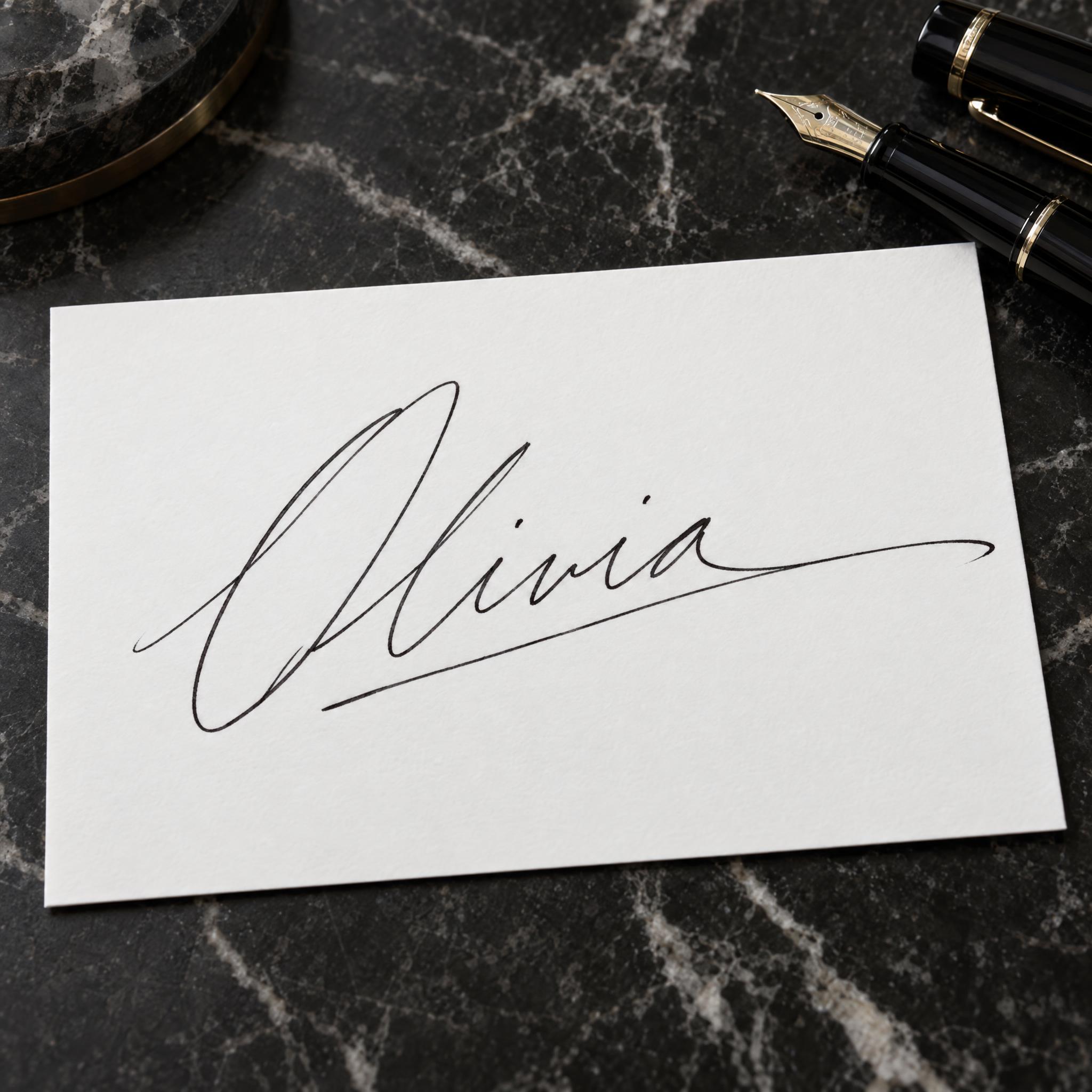
| A name written like a signature | Autograph Font | Fast, run together, underlined |
Wikipedia defines cursive as any handwriting in which the letters are joined in a flowing manner, generally to make writing faster. Ancient Rome already had one: Roman cursive was the everyday hand for letters, merchants' accounts and schoolchildren's exercises. Wikipedia ties the habit of joining partly to the quill, which was fragile and ran out of ink quickly.
The joined hands that fonts copy today were fixed by writing masters. In Britain, copybooks printed from engraved copper plates, collected in George Bickham's The Universal Penman (1733–1741), gave the pointed-pen round hand its name, copperplate, and formal script typefaces were later modelled on masters like Bickham. In America, Platt Rogers Spencer's Spencerian Script, developed around 1840, was the business hand from about 1850 to 1925.
Then the classroom took over. Around 1888 Austin Palmer simplified Spencerian into the Palmer Method, one plain cursive written with rhythmic movements of the whole arm, and it became the most popular handwriting system in the United States. Zaner-Bloser, which grew out of a penmanship college in Columbus, Ohio around 1904, and D'Nealian, introduced in 1978, followed; School Cursive draws what these methods share. The Common Core standards released in 2010 left cursive out, and a wave of state laws from 2013 to California's in 2023 put it back into elementary school.
Other countries teach their own joined hands. German schools use three: the Lateinische Ausgangsschrift of 1953, the East German Schulausgangsschrift of 1968 and the Vereinfachte Ausgangsschrift, developed in 1969. In Japan, the national curriculum set cursive English letters for the first year of junior high school up to its 1977 revision; the 1998 revision, in force from 2002, made them optional.
Away from school, joined letters became display type. Casual scripts were popular in advertising in Europe and North America into the 1970s, and Thick Cursive Font takes its heavy, even stroke from that tradition. The newest branches come from screens and skin: the coquette aesthetic, which spread on TikTok around 2021, and the fine-line single-needle script of Cursive Tattoo Font, which grew up in Los Angeles.
Sources: Wikipedia — Cursive · Wikipedia — Copperplate script · Wikipedia — Spencerian script · Wikipedia — Palmer Method · Wikipedia — Zaner-Bloser (teaching script) · Wikipedia — D'Nealian · Wikipedia — Common Core · Wikipedia (de) — Ausgangsschrift · Wikipedia (ja) — 筆記体 · Wikipedia — Script typeface · Wikipedia — Coquette aesthetic · Wikipedia — Mark Mahoney
The neat joined pencil hand of the classroom chart.
Light 19th-century American penmanship with oval capitals.
Formal pointed-pen round hand with heavy shades.
Broad-nib hand, narrow and slanted.
Bouncing letters, big loops, a long exit stroke.
Smooth brush pen script with a colour fade.
Heavy, rounded 1970s script with a solid shadow.
Fine, bouncy notebook handwriting with a small heart.
Hairline pink script with a satin bow.
One needle-thin line with long loops.
A fast, run-together name with an underline.
A cursive font imitates joined handwriting: each letter flows into the next, usually with a forward slant and loops. Every style on this page is an AI prompt that writes your own word in that hand, as an image.
Yes, for images. Type your word in the box at the top, copy the prompt and paste it into ChatGPT, Gemini, Grok, Seedream or Qwen, or press Generate on FontVibe. You get a picture of your word, not text to paste.
No. Copy-and-paste cursive is built from Unicode maths characters and stays text; these prompts make pictures. Use a picture when the word goes on a post, a print, a sticker or a logo.
Use School Cursive as a model for one word at a time, printed large enough to trace. For whole alphabets and daily practice, a school handwriting book is the better tool.
Cursive is joined handwriting. Script is the typeface family based on handwritten strokes, from formal pen scripts to brush scripts. Most cursive fonts are scripts, but not every script is cursive.
No. They are prompts, not .ttf or .otf files. You get your word as a finished image with every join drawn for your exact letters.
Copying the prompts on AIFont is free. What you may do with the image depends on the terms of the app that generated it, so check that app's rules before you print or sell.