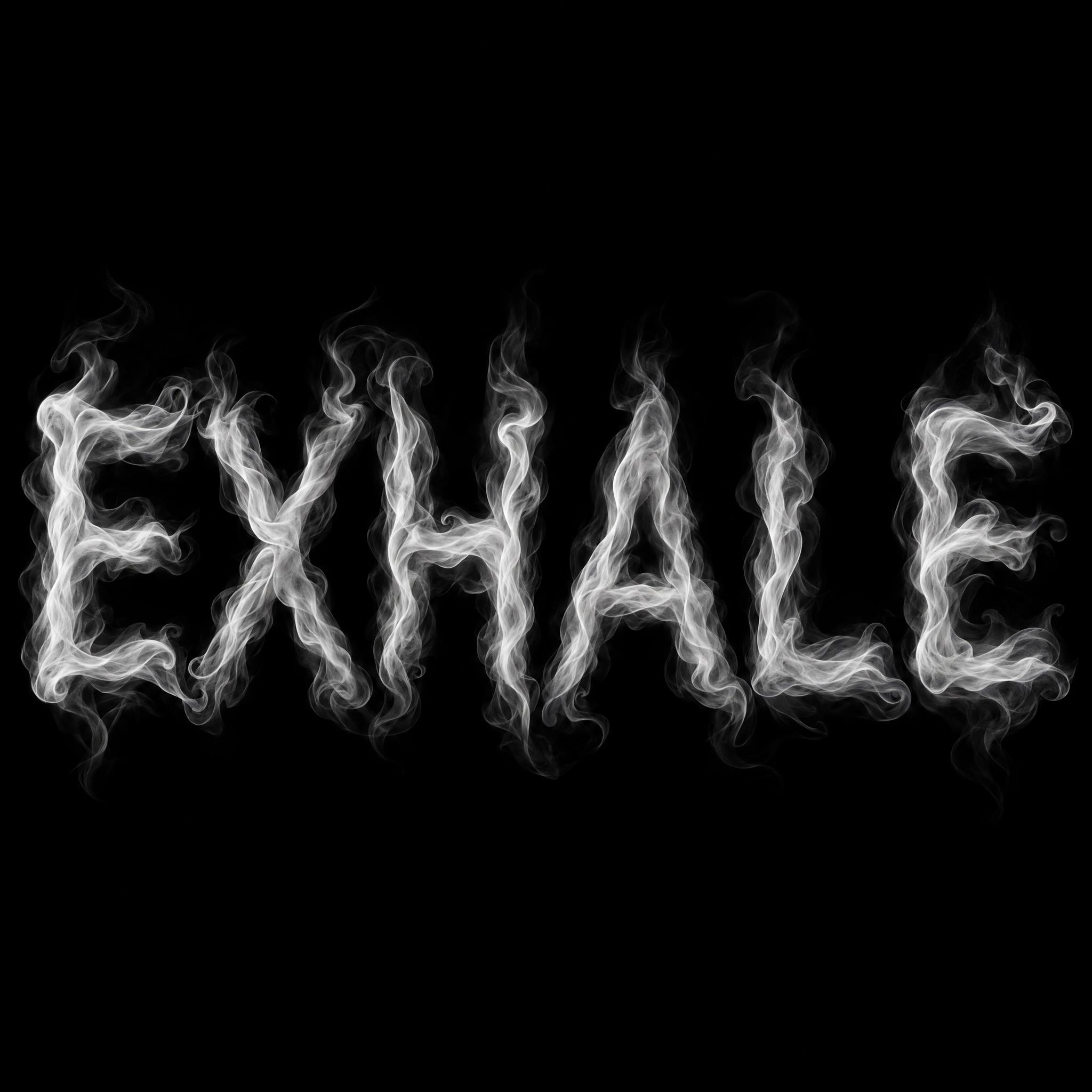
Clean, slightly condensed capitals made entirely of white smoke, dense in the middle of each stroke and fraying into thin curling wisps at the edges.
TextWrite the word "EXHALE". Spell it exactly as written, without adding or changing any letter.
Font designSmoke lettering: clean, slightly condensed capital letters with simple straight and round strokes, every letter reads at a glance. Every stroke is made of soft, curling smoke, dense along its centre so the letter shape stays solid. At the edges of each stroke the smoke frays into thin curling wisps that stay joined to the stroke and fade into the air. Inside the strokes the smoke folds and swirls. The smoke is white, turning pale grey and see-through in the wisps. It is thin, silky smoke, not puffy like clouds. Like a word drawn for a moment by a rising plume of smoke.
SceneFloating against pure black, lit from the left side by a single light that picks out the curling smoke; the word is centered, fills most of the width and reads clearly.
149 words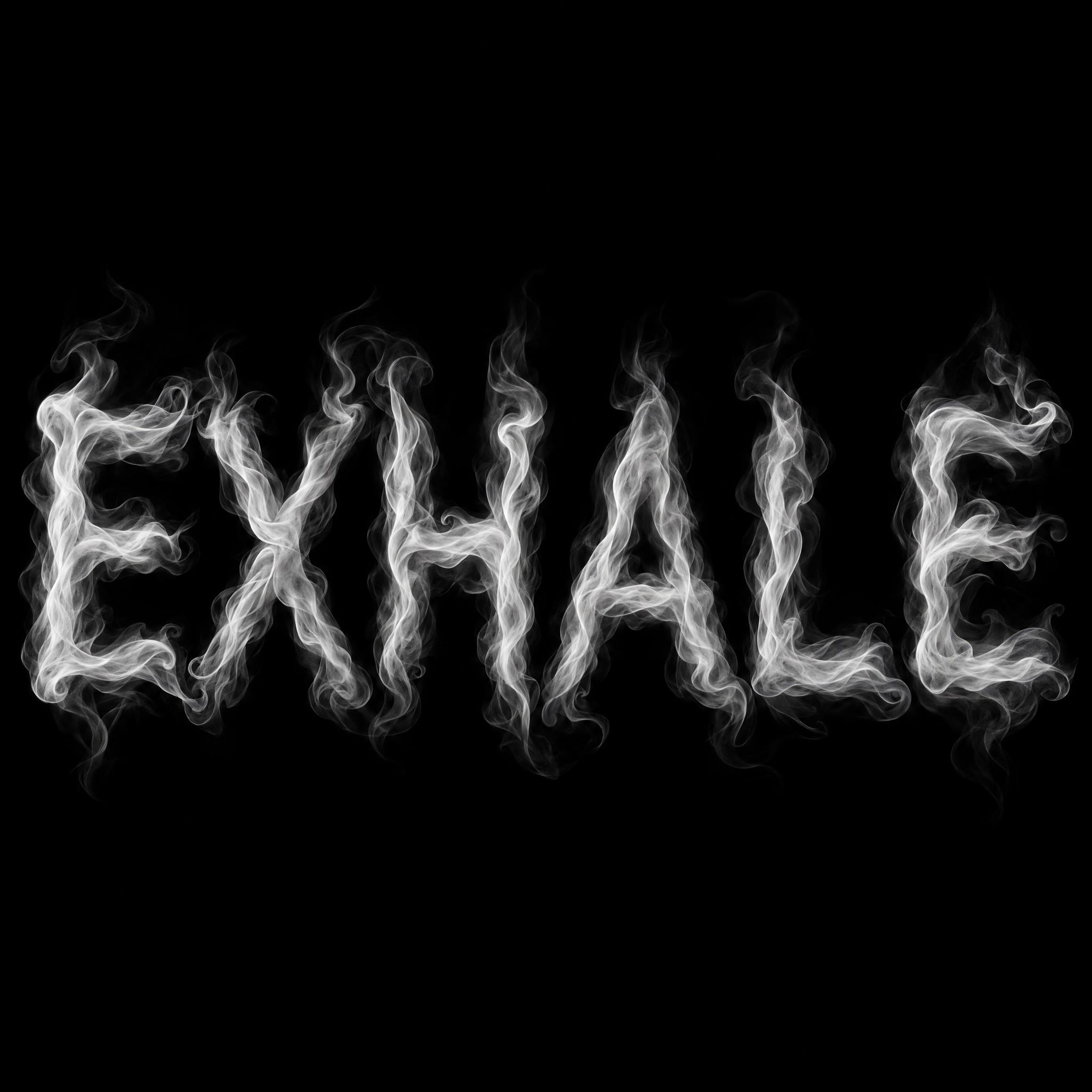
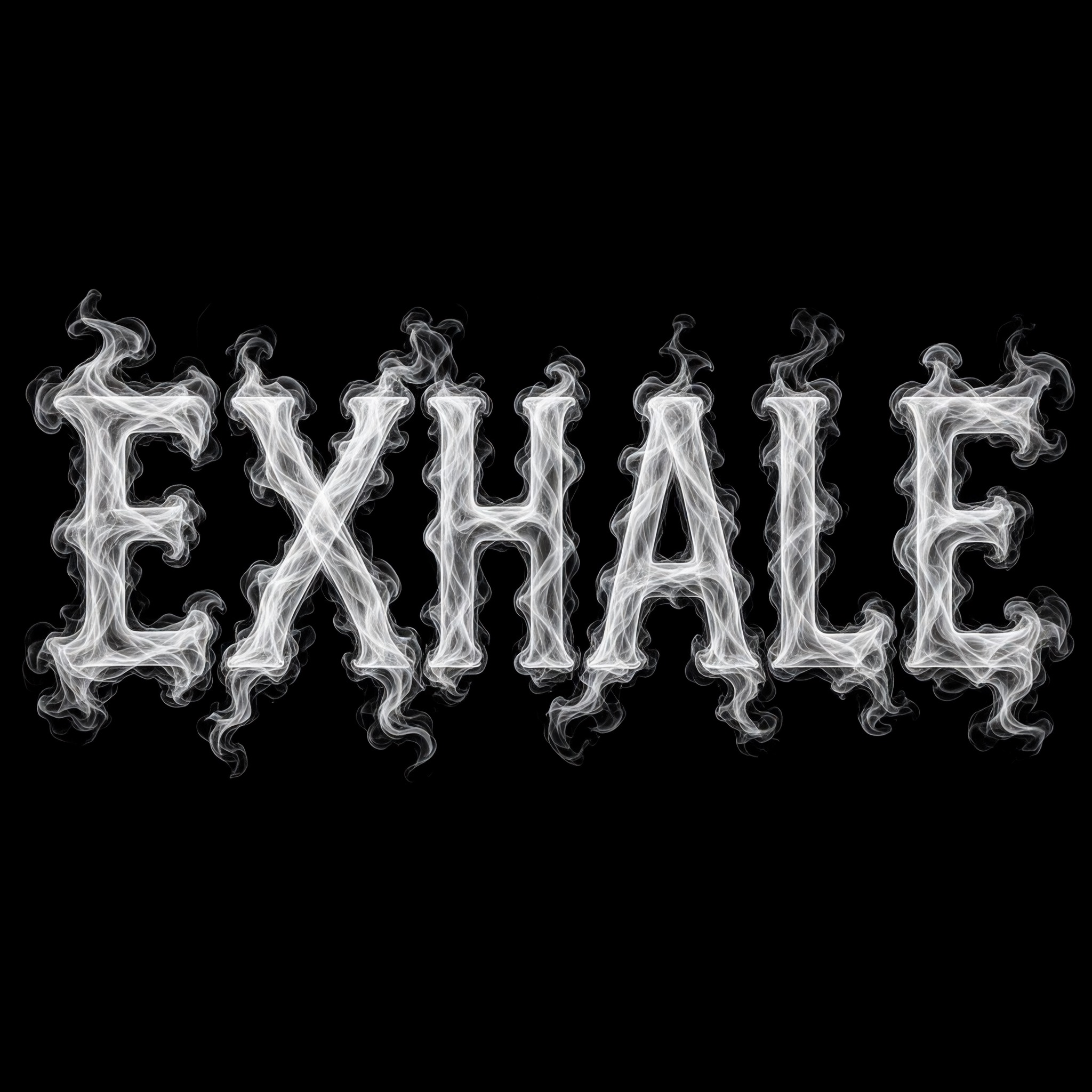
One prompt pasted into each image model as-is. These are the unedited results, so you can pick the model that suits you.
The loosest, most real-looking smoke: ragged strokes with wisps rising off every letter.
Wisps curl into hooks at the tips of every letter, almost like serifs.
Glassy, see-through letters with crisp edges; the smoke curls around them rather than fraying off.
Softer, rounder strokes with a gentle glow and fewer wisps.
Dense, tidy strokes with a faint blue-grey haze along the edges.
The button opens FontVibe in DIY mode with this prompt already in it, unchanged. Type your word, pick a model and generate. GPT Image, Nano Banana, Seedream, Grok and Qwen are all in one account, so you can see which one keeps your word readable through the smoke without signing up to five apps. Every account gets free credits each month with no card needed, and you can export a transparent PNG to lay the smoke word over your own cover or poster.
Layers in the order the prompt states them. Change one layer and the rest keeps working.
Every AIFont prompt opens with the same text part. "Spell it exactly as written, without adding or changing any letter" matters here because a wisp curling off a letter can be read as an extra stroke or an accent, and a model may tidy a frayed letter into a different one.
"Smoke lettering:" tells the model the letters themselves are made of smoke, not ordinary letters with smoke drifting around them.
"clean, slightly condensed capital letters with simple straight and round strokes, every letter reads at a glance" is the shape. Smoke softens every edge, so the letters underneath are kept plain: simple capitals survive the haze, while thin joins and serifs dissolve first. The last clause keeps the word readable.
"Every stroke is made of soft, curling smoke, dense along its centre so the letter shape stays solid." is the heart of the font. The dense centre is what holds each letter together; without it, models tend to spread the smoke so thin that the word disappears.
"At the edges of each stroke the smoke frays into thin curling wisps that stay joined to the stroke and fade into the air." gives the smoky edge. The words "stay joined to the stroke" matter: loose puffs floating above a letter look like accents or stray marks.
"Inside the strokes the smoke folds and swirls." puts movement inside each letter, so the strokes look like real smoke rather than a flat white fill with a blurred edge.
"The smoke is white, turning pale grey and see-through in the wisps." is the only colour line, so you can change it on its own for coloured smoke.
"It is thin, silky smoke, not puffy like clouds." is the one negative in the prompt. Ask for smoke letters and many models draw round cotton-ball puffs, closer to cloud letters; this line keeps the smoke fine and flowing.
"Like a word drawn for a moment by a rising plume of smoke." gives every model the same picture: real smoke that holds the shape of a word for a moment before it drifts apart.
"Floating against pure black, lit from the left side by a single light that picks out the curling smoke" is how smoke is usually shot: white smoke only shows against something dark, and a light from the side brings out the swirls. "the word is centered, fills most of the width and reads clearly" keeps the word the star. Swap this part for your own use.
Small edits that stay on-style. Change one thing at a time.
Type it in the box next to Prompt above and copy again. Short words work best: an album title, a film title or a single word like Ghost or Haze.
Swap "The smoke is white, turning pale grey and see-through in the wisps." for "The smoke is deep violet, turning pale lilac and see-through in the wisps.", "The smoke is deep red, turning pale pink and see-through in the wisps." or "The smoke is teal blue, turning pale aqua and see-through in the wisps." Keep the background dark so the colour still glows.
Replace "At the edges of each stroke the smoke frays into thin curling wisps that stay joined to the stroke and fade into the air." with "At the edges of each stroke the smoke frays into long wisps that trail upward and stay joined to the stroke." for a taller, more drifting look.
Replace "Floating against pure black, lit from the left side by a single light that picks out the curling smoke" with "Floating against a clear blue sky in bright sunlight, like skywriting", "Floating in the dark above a concert stage, lit from behind by a single purple spotlight" or "Floating above a rain-wet city street at night, lit by a single streetlight".
The prompt sets no frame size. Pick the ratio in your app, or add "Wide 16:9 image." or "Tall 4:5 image." at the end. A square or 4:5 frame suits album covers and posters.
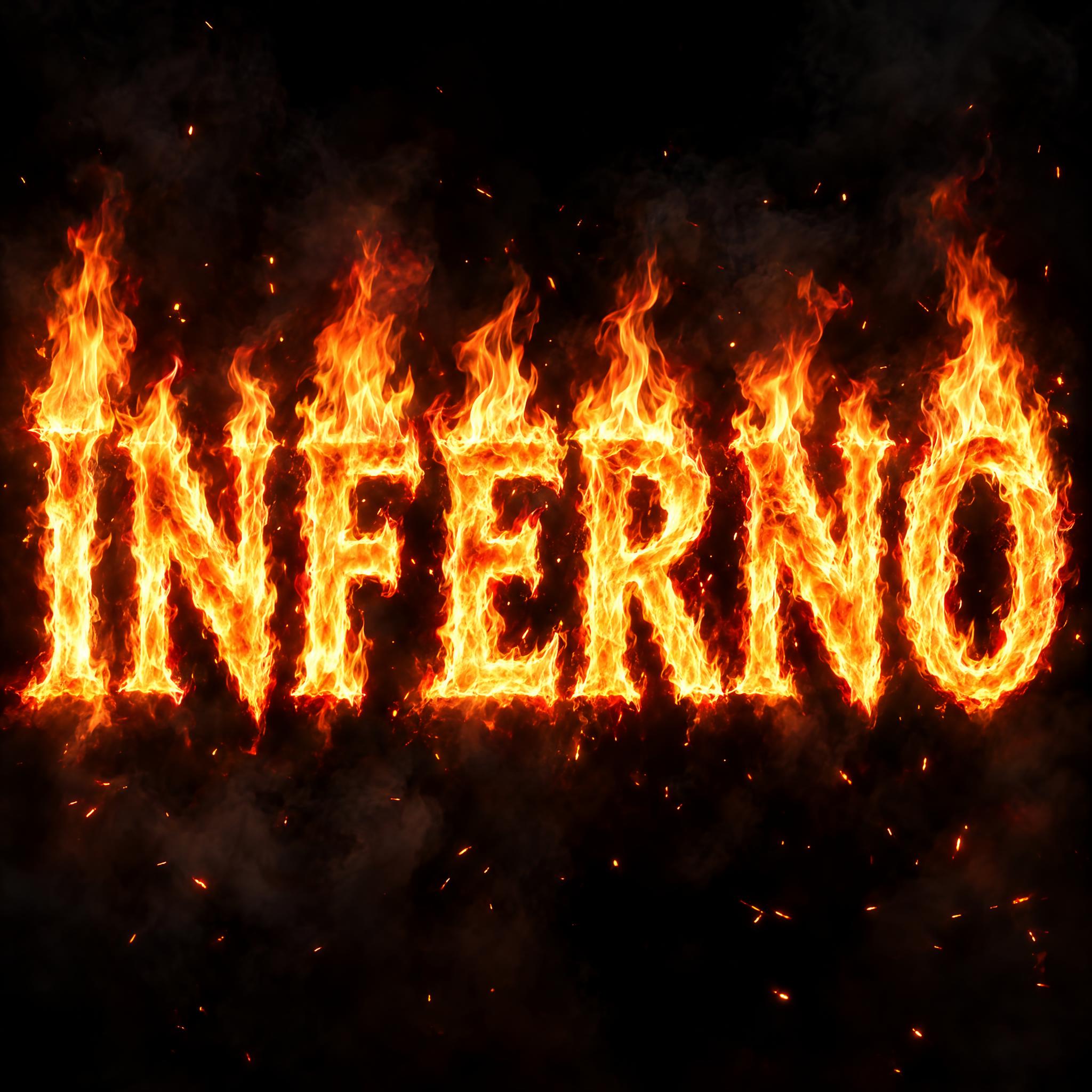
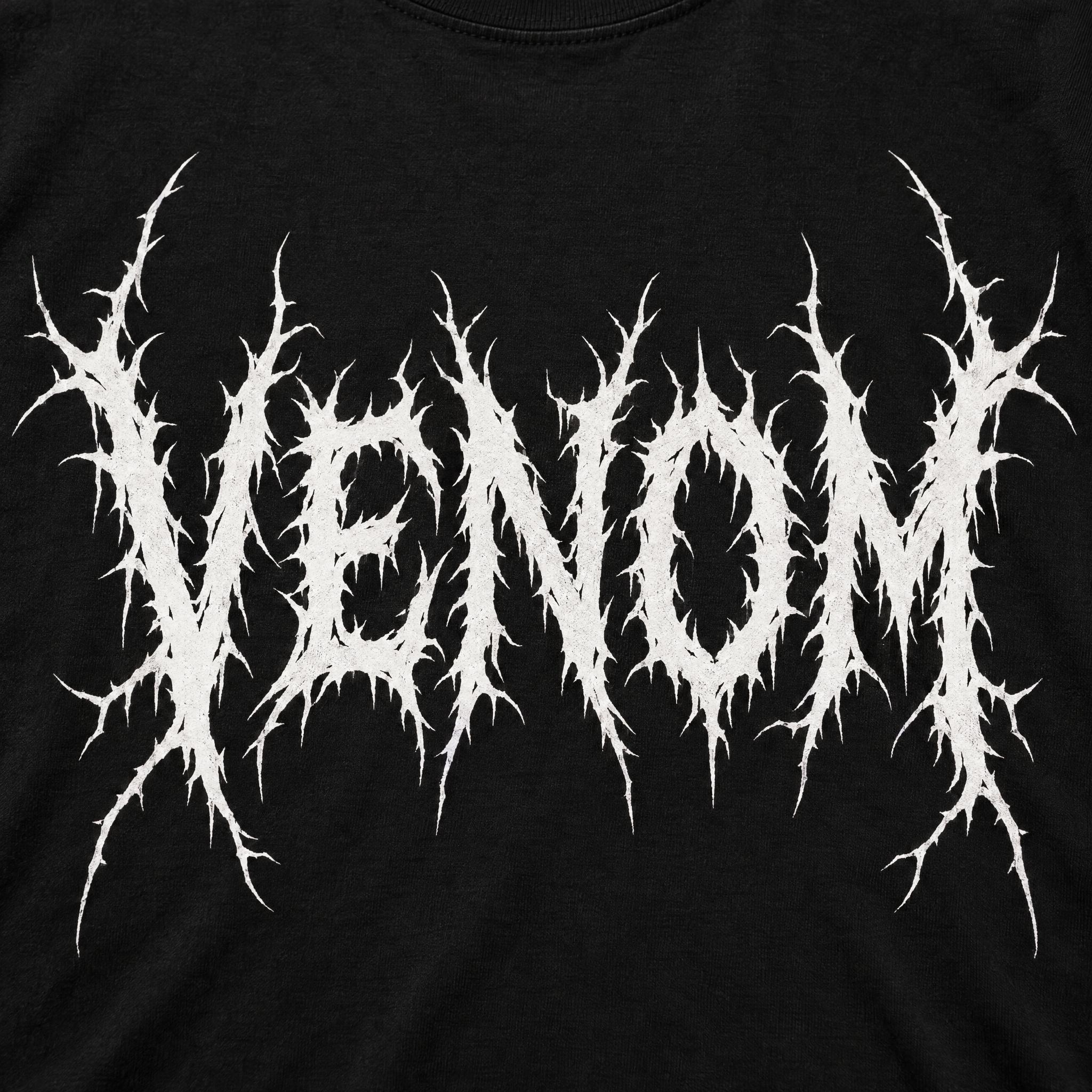
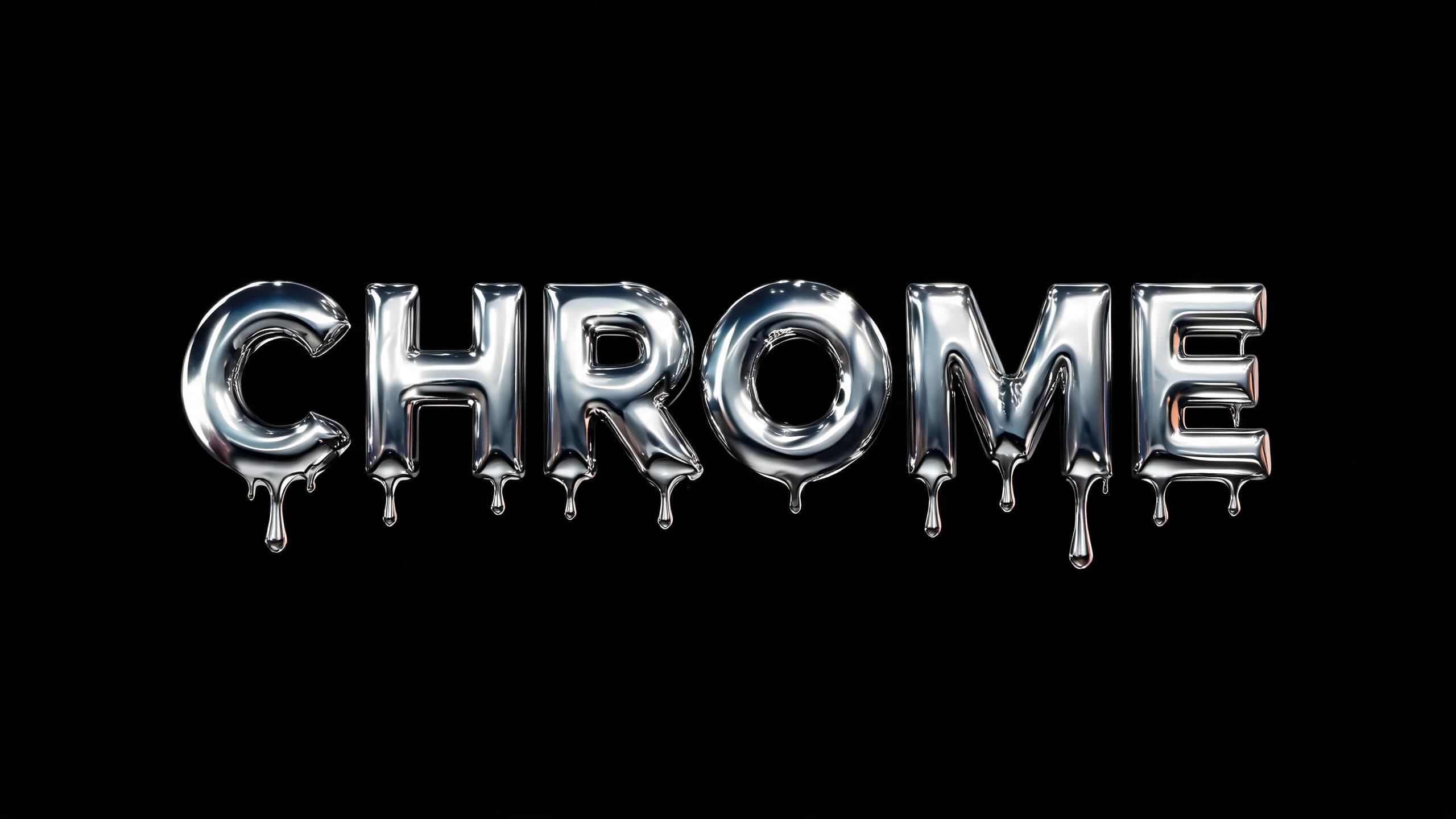
AI fonts that share the most tags with Smoke Font.
 Premium
 Premium
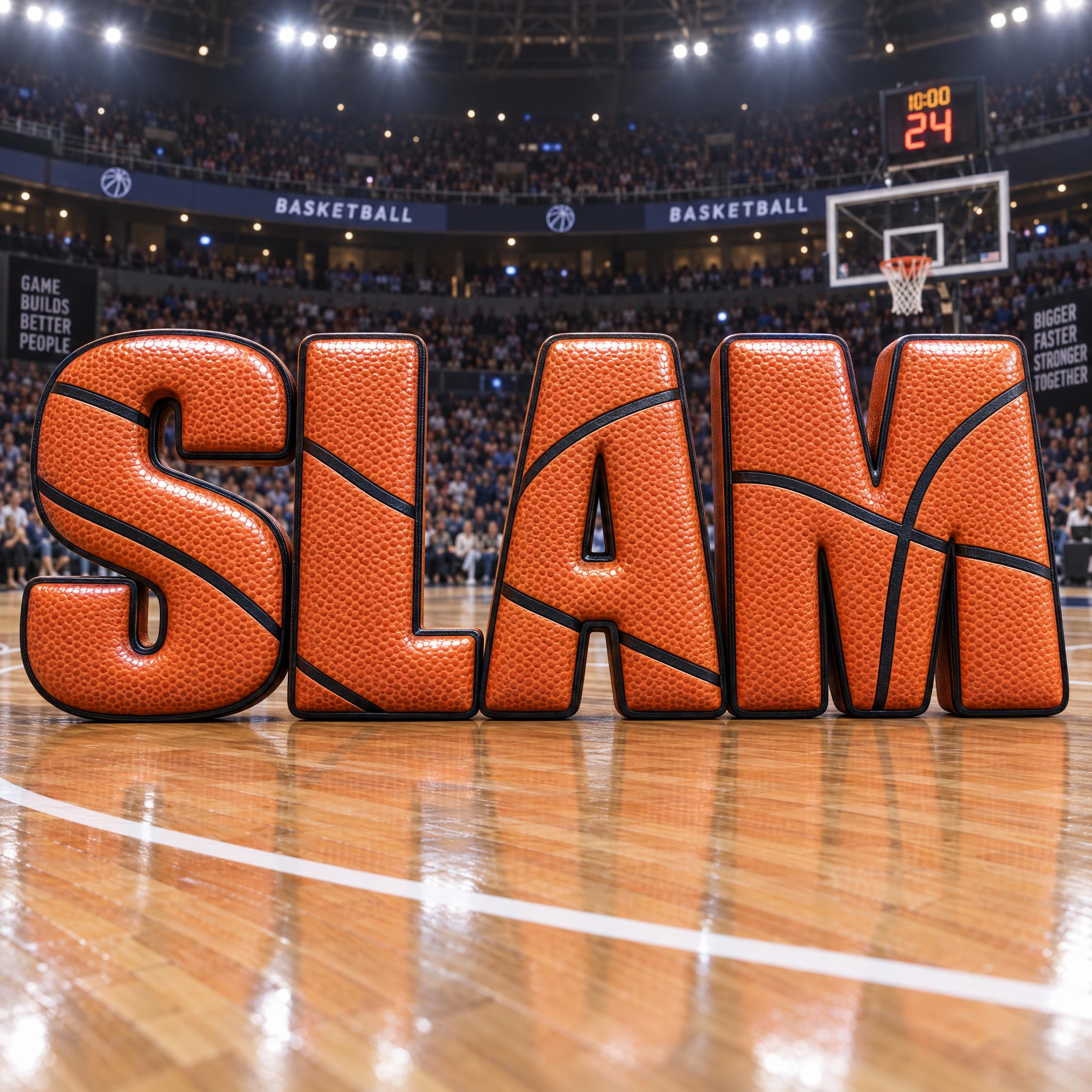
AI fonts for a second line, a logo lock-up or a poster footer.
Smoke Font draws your word out of smoke. The letters are clean, slightly condensed capitals with simple straight and round strokes, and every stroke is made of soft white smoke: dense along its centre so the letter keeps its shape, folding and swirling inside, and fraying at the edges into thin wisps that stay attached and fade into the air. It is fine, silky smoke, not the puffy cloud letters you often get when you only ask for smoke.
Type your word in the box above the prompt, copy it and paste it into ChatGPT, Gemini, Grok, Qwen or Seedream. The prompt has three parts: the text, the font design and the scene. The font design makes the capitals, the smoke and the wisps; the scene floats the word on pure black with one light from the left, and you can swap it for your own. Every image on this page is what each model returned from the unchanged prompt, with no retouching.
Use it for album and single covers, mystery and thriller film posters, book covers, and title cards for video intros and trailers.
Details from the original render. Every one of them is named in the prompt.
Every stroke is soft white smoke, dense along its centre.
The edges fray into thin curling wisps that stay attached.
The smoke folds and swirls inside each stroke.
Clean, slightly condensed capitals that survive the haze.
Pulled from the render. Handy when you build the rest of the design around the word.
Where this AI font earns its keep.
People wrote words in smoke long before image models. In skywriting, a pilot injects oil into the plane's hot exhaust, where it turns into dense white smoke, and flies the letters one by one. The first recorded advertising use was over the Derby at Epsom Downs in May 1922, when Captain Cyril Turner wrote Daily Mail above the course; on 28 November 1922 he wrote Hello USA over Times Square in New York. Pepsi-Cola was one of the first big clients, with 2,225 flights in 1940 alone, and from 1946 skytyping replaced the single pilot with five planes flying side by side, releasing puffs of smoke under computer control like a dot-matrix printer.
Skywritten letters never last: wind and the planes' wake blur and twist them, usually within a few minutes. Film made the same picture famous. In The Wizard of Oz (1939) the Wicked Witch flies her broomstick across the sky to write SURRENDER DOROTHY, and the shot was not made in the sky at all: the effect was black ink spread with a hypodermic needle across the bottom of a glass tank of tinted water.
This prompt takes that short, readable moment and moves in close. A skywritten word is a thin line that drifts apart; here each stroke has a dense core of white smoke that keeps the letter solid, and only the edges fray into wisps. The pure black background and the single side light do what a dark sky would: they let the white show.
Sources: Wikipedia — Skywriting · Wikipedia — Surrender Dorothy
Captain Cyril Turner writes Daily Mail in the sky over Epsom Downs, the first recorded use of skywriting in advertising.
On 28 November Turner writes Hello USA over Times Square, followed by a phone number to call.
The Wicked Witch writes SURRENDER DOROTHY across the sky in The Wizard of Oz, an effect made with ink in a water tank.
Five planes flying side by side release puffs of smoke under computer control, writing words like a dot-matrix printer.
All five models spelled the words right in every language except one Arabic image (below). GPT Image gives the loosest, most real-looking smoke; Qwen the tidiest; Grok adds curly hooks to each letter. Nano Banana's letters look more like glass, with crisp edges that don't fray, and the smoke curls around them. In Arabic, Seedream added a dot over the first letter. Compare them side by side above.
No. It is a prompt that makes a picture of your word made of smoke with an AI image model. There is no font file to install. A typed font cannot curl and fade like real smoke; this page is for when you want one word as a smoke image.
Fire Text is a word made of real flames, bright at the core. This one has no fire at all: cool white smoke on black, quieter and more mysterious. Use Fire Text for heat and action, and this one for suspense, music and anything that should feel as if it might vanish.
Yes. Replace the letter clause with "a flowing hand-written script with simple joined strokes, every letter reads at a glance". Keep the strokes simple: fine joins are the first thing the smoke washes out.
White smoke only shows against something dark. If you change the scene, keep it dark, or change the smoke colour so it still stands out; on a white background, white smoke disappears.
Type it in the box next to the prompt and copy the full prompt again. Short words read best; in a long word the wisps from one letter run into the next.
Change only "The smoke is white, turning pale grey and see-through in the wisps.", for example to "The smoke is deep violet, turning pale lilac and see-through in the wisps."
Pick the ratio in your app if it has one. If not, add "Wide 16:9 image." or "Tall 4:5 image." at the end of the prompt.
Keep the black background and set the image layer to the Screen blend mode in your editor: the black drops out and only the smoke stays, ready to lay over a photo. Or use the FontVibe button above: it can export a transparent PNG.
Copying the prompt is free. Whether the image costs anything depends on the app you paste it into, and what you may do with the image depends on that app's terms.