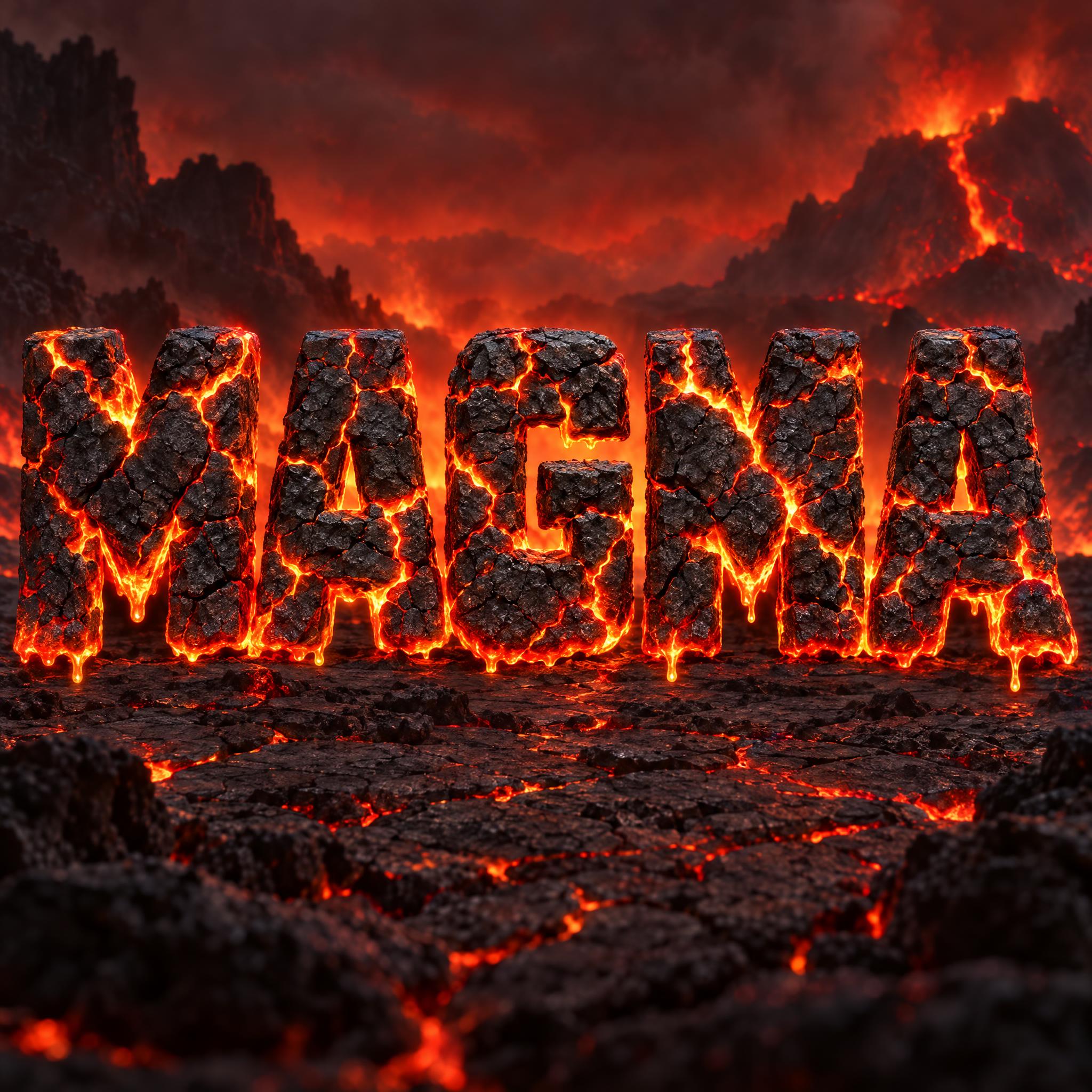
Heavy block capitals in a crust of black volcanic rock, split by cracks that glow with orange-red molten lava.
TextWrite the word "MAGMA". Spell it exactly as written, without adding or changing any letter.
Font designLava rock lettering: heavy, blocky capital letters with flat tops and squared-off corners, every letter reads at a glance. The surface of every letter is a crust of black volcanic rock split into irregular plates by a network of cracks; the cracks never change the letter shape. Bright molten lava glows through every crack. The crust is charcoal black and the lava is orange-red, yellow-white in the widest cracks. The bottom edges have begun to melt and sag, with a few short drops of lava hanging from them. The glow comes only from the cracks. Like a cooling lava flow shaped into a word.
SceneSet on dark, cracked volcanic ground with heat shimmer in the air and a dim red glow behind; the word is centered, fills most of the width and reads clearly.
149 words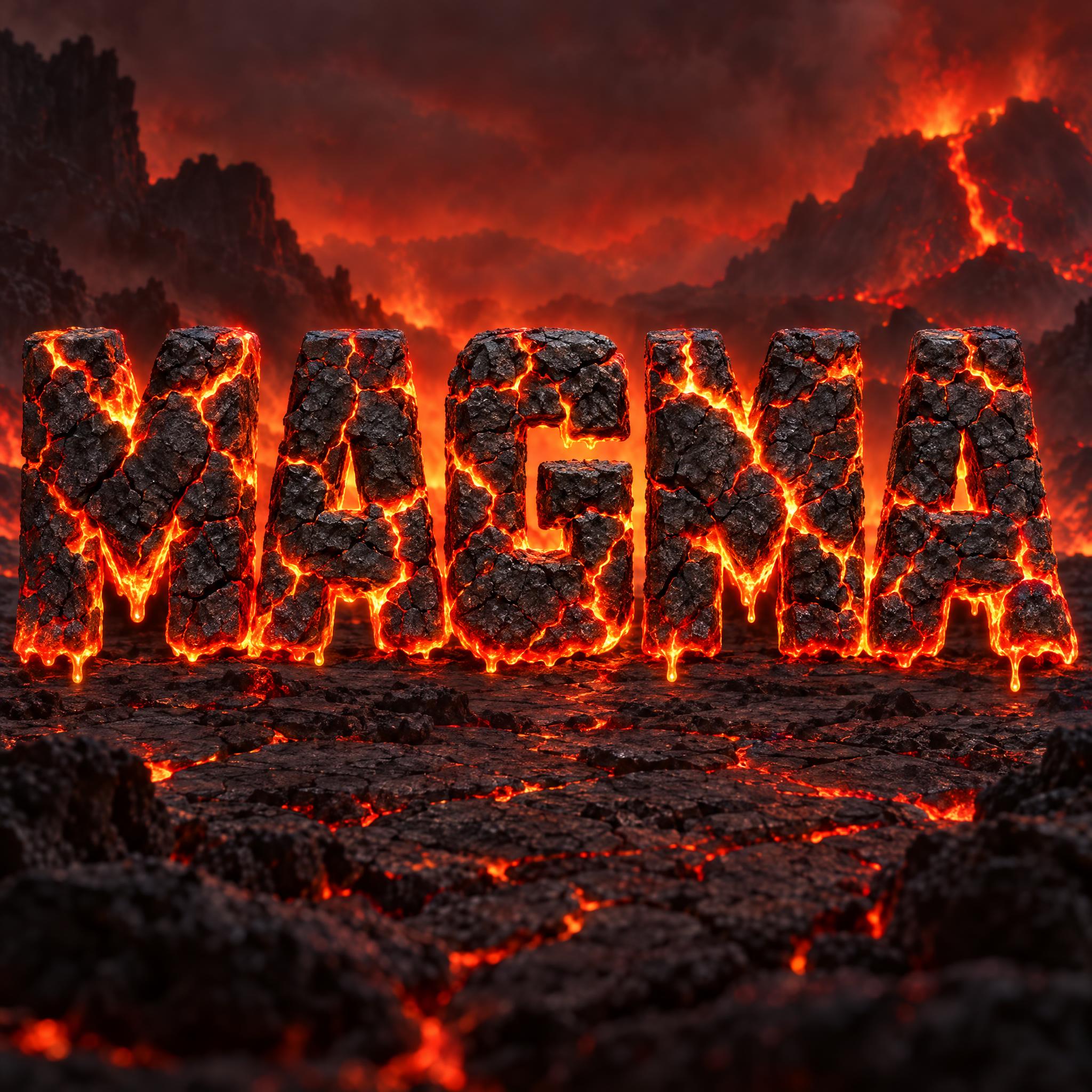
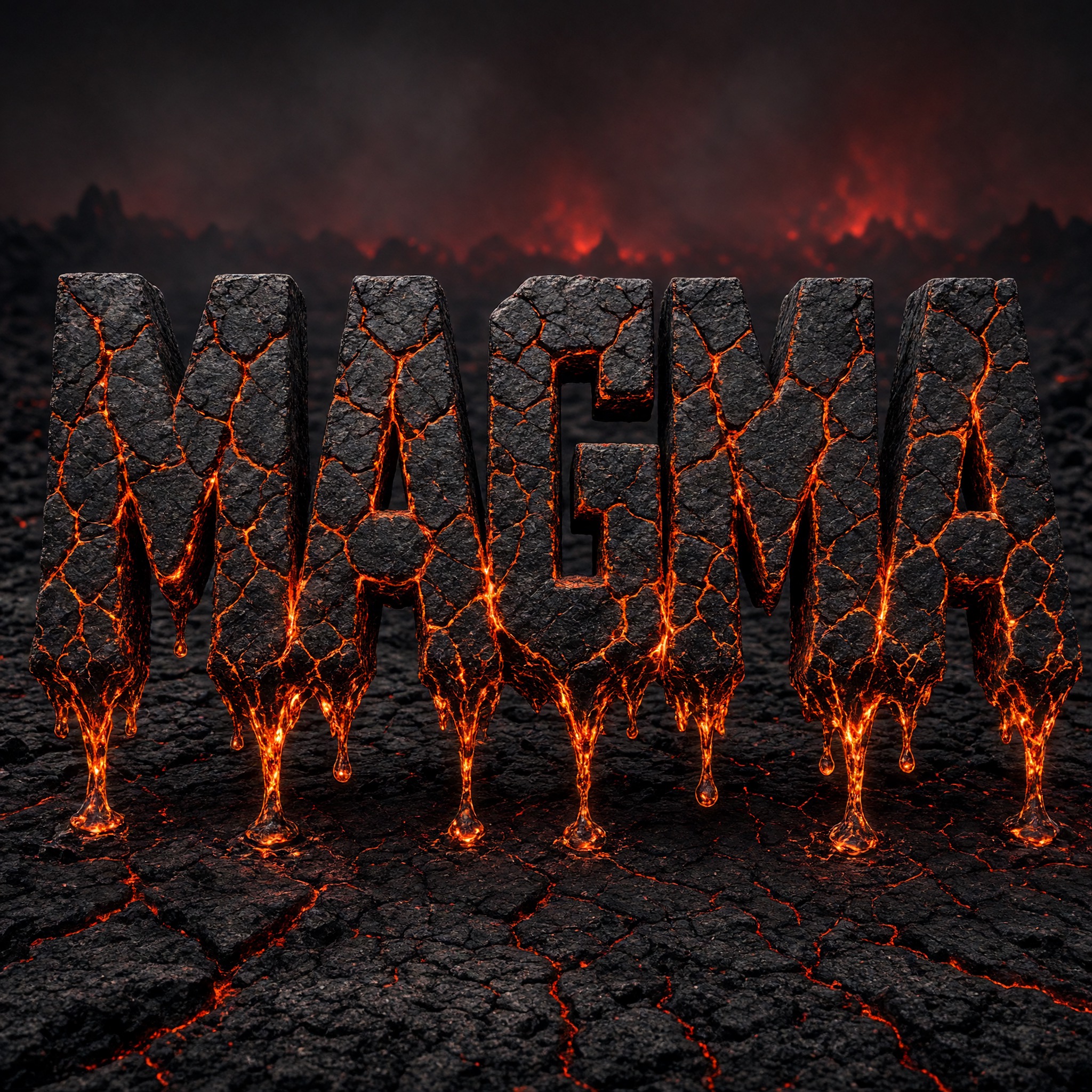
One prompt pasted into each image model as-is. These are the unedited results, so you can pick the model that suits you.
The roughest, most pitted rock, with an erupting volcano and a field of glowing lava behind.
Fine cracks all over and the longest drips, which pool on the ground.
Smooth, clean rock plates and the brightest yellow-white cracks, with short drips.
Large plates, bright yellow drips along the base and a deep red glow behind.
Tall, narrow letters with thin cracks and long, thin drips.
The button opens FontVibe in DIY mode with this prompt already in it, unchanged. Type your game title or name, pick a model and generate. GPT Image, Nano Banana, Seedream, Grok and Qwen are all in one account, so you can see which one keeps the cracks inside the letters and the word easy to read without signing up to five apps. Every account gets free credits each month with no card needed, and you can export a transparent PNG to drop the lava title onto your own thumbnail or poster.
Layers in the order the prompt states them. Change one layer and the rest keeps working.
Every AIFont prompt opens with the same text part. "Spell it exactly as written, without adding or changing any letter" matters here because a cracked surface is full of lines, and a model can read a crack as an extra stroke and turn one letter into another.
"Lava rock lettering:" tells the model the letters are made of rock with lava inside, before it reaches for the more common burning-letter effect.
"heavy, blocky capital letters with flat tops and squared-off corners, every letter reads at a glance" is the shape. Thick strokes leave room for plates and cracks inside each letter; thin letters would be all crack and no rock.
"The surface of every letter is a crust of black volcanic rock split into irregular plates by a network of cracks; the cracks never change the letter shape" is the core of the look. The second half stops the cracks from biting chunks out of the letters.
"Bright molten lava glows through every crack." is what makes it lava rather than plain stone. Without it you get cracked rock letters with nothing inside.
"The crust is charcoal black and the lava is orange-red, yellow-white in the widest cracks." is the only colour line. The yellow-white follows real lava, which glows yellower the hotter it is. Change this one sentence to recolour the lava.
"The bottom edges have begun to melt and sag, with a few short drops of lava hanging from them." adds heat and weight. The drops are kept few and short so they don't run into the next letter.
"The glow comes only from the cracks." keeps the light inside the rock. Models like to add flames on top of anything hot; this sentence says where the light is instead of listing what not to draw.
"Like a cooling lava flow shaped into a word." gives every model the same picture: a flow whose skin has gone black while the inside is still molten.
"Set on dark, cracked volcanic ground with heat shimmer in the air and a dim red glow behind" keeps the background dark, so the glowing cracks stay the brightest thing in the picture; "the word is centered, fills most of the width and reads clearly" keeps the word the star. Swap this part for your own use.
Small edits that stay on-style. Change one thing at a time.
Type it in the box next to Prompt above and copy again. Short, heavy words work best: a game title, a level name, BOSS or ERUPTION.
Swap "The crust is charcoal black and the lava is orange-red, yellow-white in the widest cracks." for "The crust is charcoal black and the lava is electric blue, white in the widest cracks.", "The crust is dark grey and the lava is acid green, pale yellow in the widest cracks." or "The crust is charcoal black and the lava is violet-pink, white in the widest cracks." for a fantasy or alien look.
Replace "The bottom edges have begun to melt and sag, with a few short drops of lava hanging from them." with "The bottom edges are melting heavily, with long drips of lava running down to the ground." for a word that is falling apart, or with "The bottom edges are crisp and straight, as if the lava has just set." for a cleaner logo.
Replace "Set on dark, cracked volcanic ground with heat shimmer in the air and a dim red glow behind" with "Set on a plain black background with a faint red glow behind", "Set above a dark lake of molten lava at night" or "Set on a cracked stone floor in a dark cave".
The prompt sets no frame size. Pick the ratio in your app, or add "Wide 16:9 image." or "Tall 4:5 image." at the end. A game title screen or thumbnail suits 16:9; a movie poster suits 4:5.
AI fonts that share the most tags with Lava Font.
 Premium
AI fonts for a second line, a logo lock-up or a poster footer.
Lava Font builds your word out of a lava flow that has started to cool: heavy, blocky capitals with flat tops and square corners, each one covered in a crust of charcoal-black volcanic rock. A network of cracks breaks the crust into irregular plates, and bright molten lava glows through every crack, orange-red in the narrow ones and yellow-white in the widest. The bottom edges have begun to melt and sag, with a few short drops of lava hanging from them. The light comes only from the cracks, so the letters stay dark and solid.
Type your word in the box above the prompt, copy it and paste it into ChatGPT, Gemini, Grok, Qwen or Seedream. The prompt has three parts: the text, the font design and the scene. The font design makes the rock crust, the glowing cracks and the colour; the scene stands the word on dark volcanic ground with heat shimmer, and you can swap it for your own. Every image on this page is what each model returned from the unchanged prompt, with no retouching.
Use it for video game titles and level names, disaster and action movie posters, YouTube thumbnails and anywhere you want molten text or magma text that still reads at a glance.
Details from the original render. Every one of them is named in the prompt.
Charcoal-black volcanic rock split into irregular plates.
Orange-red molten lava shows through every crack.
The widest cracks turn yellow-white.
Bottom edges sag, with a few short drops of lava.
Pulled from the render. Handy when you build the rest of the design around the word.
Where this AI font earns its keep.
Lava is an Italian word that first meant a stream of water after sudden rain. Its earliest known use for molten rock is in Francesco Serao's short account of the 1737 eruption of Vesuvius.
Geologists borrow two Hawaiian words for lava flows. Pāhoehoe has a smooth, billowy or ropy surface; ʻaʻā is rough and rubbly, made of broken blocks called clinker. Either way, a flow loses heat fast and soon grows an insulating crust of solid rock, while lava can keep moving as a liquid underneath. Where that crust splits, the inside shows: a USGS photo of an inflating pāhoehoe flow on Kīlauea shows cracks running across the dark surface, the largest of them incandescent.
The colour of the glow is a rough thermometer. The USGS Hawaiian Volcano Observatory puts yellow at about 1000–1200 °C, orange at 800–1000 °C and red at 600–800 °C. This prompt uses that scale: orange-red in ordinary cracks and yellow-white in the widest ones.
The same picture of a crust over moving fire carries a lot of entertainment. In 1997 two volcano disaster films opened in US cinemas within three months, Dante's Peak in February and Volcano in April, with lava running down Wilshire Boulevard in Los Angeles. In 2020 Netflix turned the playground game the floor is lava into a game show, Floor Is Lava, with a pool of bright red goo standing in for the lava. This prompt copies no title from any of them; it takes the physics: black plates, light only from the cracks, and capitals heavy enough to read through it all.
Sources: Wikipedia — Lava · USGS — View of surface of inflating pahoehoe flow · USGS — Volcano Watch: Remotely measuring the temperature of Kīlauea lava · Wikipedia — Dante's Peak · Wikipedia — Volcano (1997 film) · Wikipedia — Floor Is Lava
Francesco Serao's account of the eruption of Vesuvius is the earliest known use of lava for molten rock.
The film Volcano sends a lava flow through the streets of Los Angeles, two months after Dante's Peak.
Netflix premieres a game show based on the children's game, with bright red goo playing the lava.
In English all five models wrote MAGMA correctly in black volcanic rock with glowing lava in the cracks, and none put flames on the letters. Nano Banana gives the cleanest plates and the brightest yellow-white cracks; GPT Image the roughest rock, with a volcano behind; Grok and Qwen let the lava drip the longest. Compare them side by side above.
No. It is a prompt that makes a picture of your word as cracked rock with glowing lava, using an AI image model. There is no font file. Some downloadable typefaces happen to be named Lava; they are ordinary fonts with no rock or glow. This page is for when you want the finished molten effect as an image.
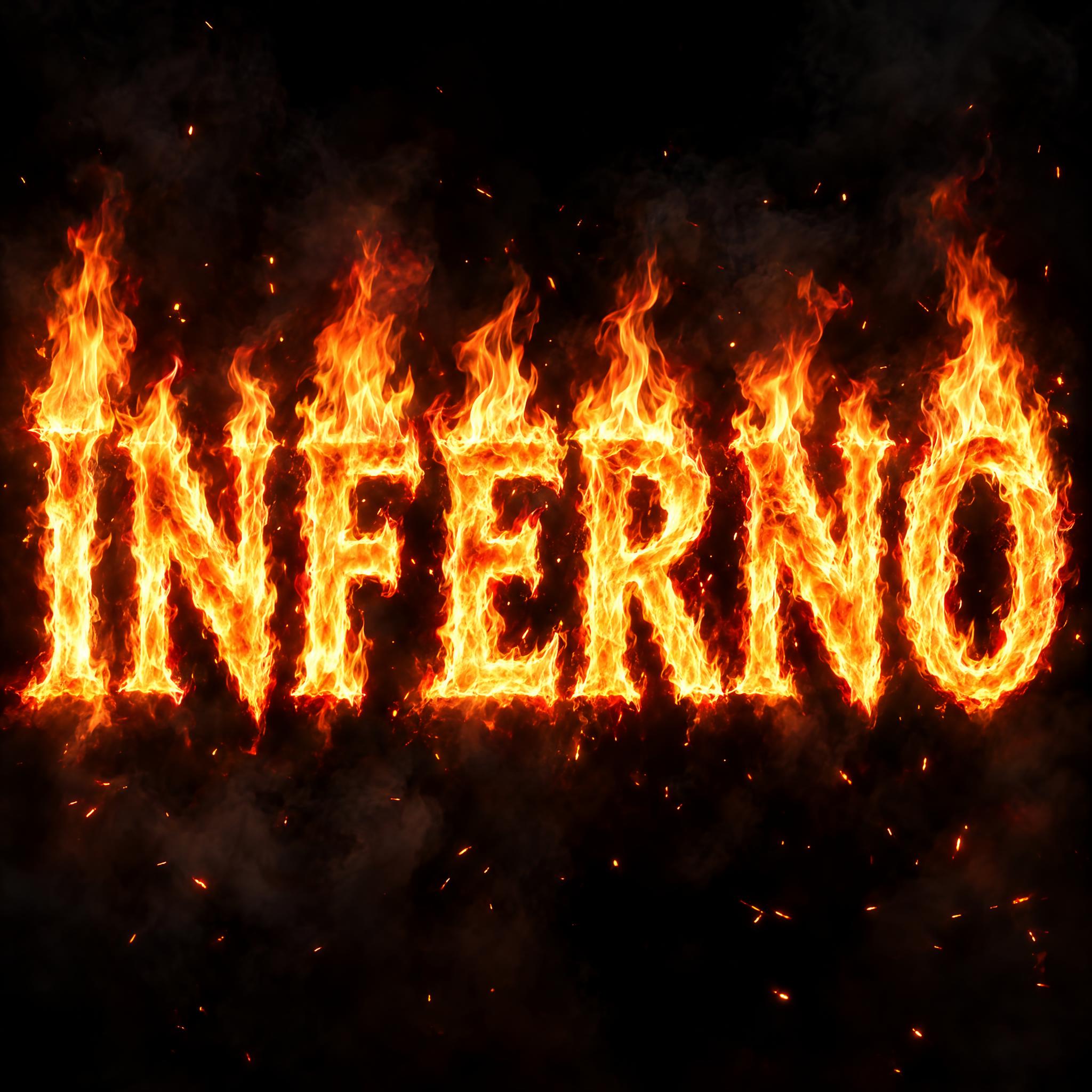
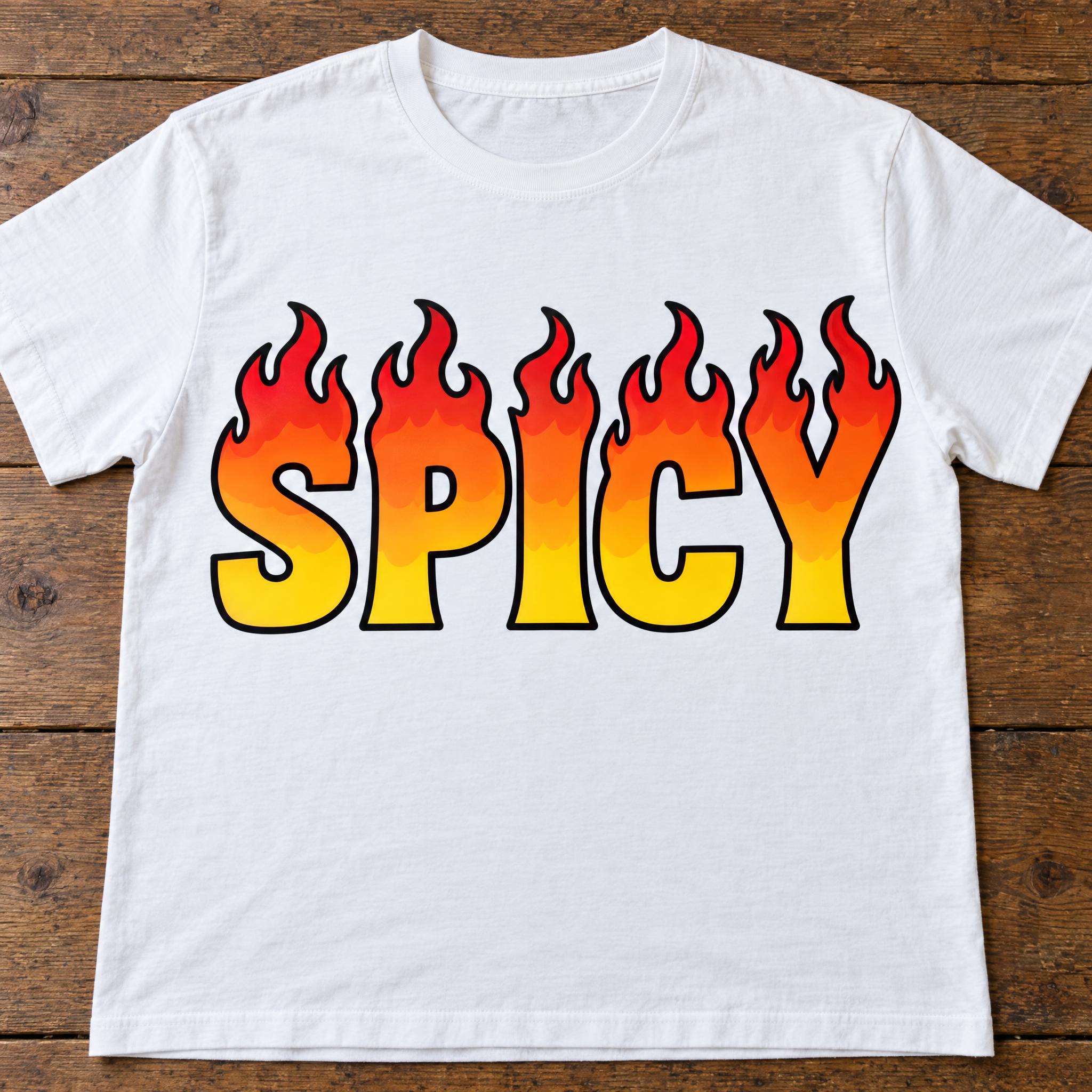
Fire Text builds letters out of real flames, and Flame Font is a flat cartoon letter with flame tongues on top. Here nothing burns: the letters are solid black rock, and the only light comes from lava in the cracks. Pick this one for volcano, magma or underworld themes.
Yes, that is the same look under a different name. If you want the letters more liquid, ask for more melt at the bottom edges in the font design; if you want them more solid, keep the edges crisp.
Type it in the box next to the prompt and copy the full prompt again. Short words with thick letters leave the most room for cracks; a long name makes each letter thinner and the cracks finer.
Change only "The crust is charcoal black and the lava is orange-red, yellow-white in the widest cracks.", for example to "The crust is charcoal black and the lava is electric blue, white in the widest cracks."
Pick the ratio in your app if it has one. If not, add "Wide 16:9 image." or "Tall 4:5 image." at the end of the prompt.
Replace the scene with a plain one, for example "The word is on a plain white background.", and remove the background in any editor. Or use the FontVibe button above: it can export a transparent PNG.
Copying the prompt is free. Whether the image costs anything depends on the app you paste it into, and what you may do with the image depends on that app's terms.